
Stipagrostis ciliata
Stipagrostis ciliata
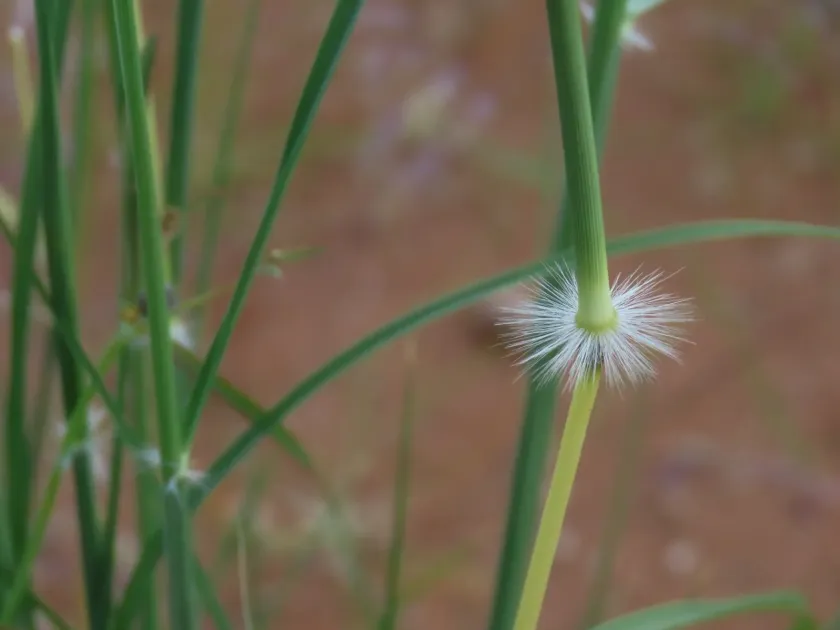
Description
Growing requirements
Stipagrostis ciliata is a perennial grass species belonging to the Poaceae family, known for its extreme resilience in arid and semi-arid environments.
This species naturally occurs in the sandy deserts and dune landscapes of North Africa, the Middle East, and parts of Central Asia, where moisture is scarce.
The plant thrives in deep, sandy soils with excellent drainage, showing high tolerance to saline conditions that would be lethal to most other crops.
Botanically, it is a xerophyte with specialized leaf structures designed to minimize transpiration and survive prolonged drought periods during high-temperature months.
Agrotechnical requirements focus on site selection with intense sunlight, as the species is highly sensitive to frost and waterlogged soil conditions.
Yield
In agricultural practice, Stipagrostis ciliata serves primarily as a key fodder resource for camels, sheep, and goats in nomadic and semi-nomadic grazing systems.
Although the biomass yield is limited compared to intensive farming crops, its ability to provide forage when other vegetation dries out makes it economically significant.
The nutritional profile of the grass is adapted to low-input environments, providing sufficient fiber to support livestock survival in harsh desert climates.
Beyond its value as fodder, the plant is effectively used in land reclamation projects to anchor shifting sands and protect surrounding agriculture from desert encroachment.
Sustainable management requires harvesting in a way that allows for natural reseeding, ensuring the longevity of these important desert pastures.
Main diseases and pests
Stipagrostis ciliata exhibits significant natural resistance to most plant pathogens due to its specialized adaptation to extreme desert temperatures.
Locust outbreaks represent the primary biological threat to these grasses, capable of rapidly consuming large patches of vegetation during wet seasonal cycles.
Fungal diseases are rarely encountered in their native habitats, as the low humidity environment inhibits the development of common cereal pathogens.
The major anthropogenic threat involves overgrazing, which destabilizes the soil crust and leads to the degradation of the delicate desert ecosystem.
Integrated pest management strategies are generally unnecessary for this species, emphasizing instead the importance of protective grazing rotation and land conservation.