
Woolly Stipagrostis
Stipagrostis lanata
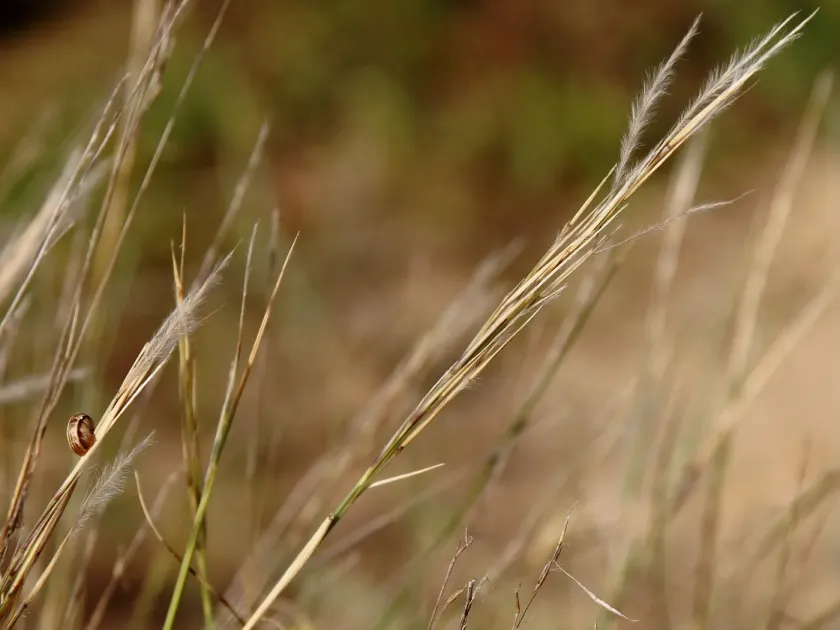
Description
Growing requirements
Stipagrostis lanata, commonly known as Woolly Stipagrostis, is a resilient perennial grass belonging to the Poaceae family. This species is native to arid environments, particularly the sandy deserts of Africa.
The plant is biologically optimized for extreme heat and moisture deficit, featuring specialized hairs that reduce water loss. It plays a critical ecological role as a sand-binding agent, stabilizing dunes against wind erosion.
Regarding cultivation requirements, the species thrives in sandy, well-aerated soils with minimal nutrients. It cannot tolerate waterlogging or saline soil conditions, which inhibit its root development.
Agronomic management is primarily focused on conservation and erosion control rather than traditional forage production, though it serves as supplemental feed for local livestock.
The grass exhibits a slow growth habit, which is an adaptation to low resource availability in its natural habitat, making it highly efficient in nutrient uptake.
Main diseases and pests
Fungal infections remain the primary biological threat, usually appearing after unexpected periods of high humidity in typically dry environments.
Orthoptera species, such as locusts and grasshoppers, represent the main insect pests capable of causing significant damage to the plant's foliage.
Overgrazing by camels and other livestock is the most severe threat, leading to localized extinction and irreversible soil erosion.
Seed-predatory beetles can significantly hamper the plant's ability to regenerate and expand its range naturally.
Invasive species can displace Stipagrostis lanata if the fragile desert crust is disturbed by human activity or vehicle traffic.