
Short-leaved Stipagrostis
Stipagrostis brevifolia
Description
Growing requirements
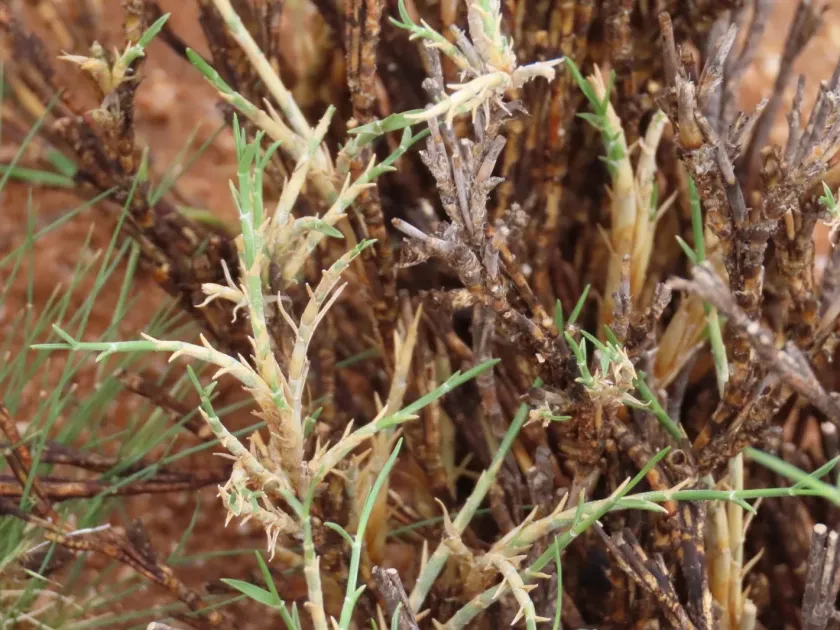
Stipagrostis brevifolia, or the Short-leaved Stipagrostis, is a perennial grass species belonging to the family Poaceae. It is a highly specialized plant adapted to the challenging environments of desert and semi-desert regions.
The plant possesses a deep, extensive root system designed to exploit subsurface water reservoirs in extremely dry conditions. Its physiological adaptations allow it to survive intense heat and prolonged droughts common in its native range.
Originating from Southern Africa, particularly the arid landscapes of Namibia, this species has evolved to thrive in sandy soils with low organic content. It acts as a primary stabilizer of shifting sand dunes, playing an ecological role in soil conservation.
Climatic requirements are focused on high light intensity and low atmospheric humidity. The plant does not tolerate waterlogging, requiring well-drained, porous soils to maintain root health and prevent necrosis.
In agricultural practice, it is utilized as a browse species in extensive grazing systems. Its ability to maintain foliage under water stress makes it a valuable resource for maintaining biomass on arid rangelands where other forage species fail.
Main diseases and pests
Overgrazing poses the most significant threat to the survival and productivity of this species. Uncontrolled livestock pressure leads to the compaction of soil and prevents the plant from setting seed, reducing overall range vigor.
Typical pests include desert locusts and various grass-feeding arthropods that can cause significant damage to the plant's photosynthetic apparatus. Under extreme stress, plants become more susceptible to structural damage.
Fungal pathogens are of minor concern in its natural habitat due to the arid environment. However, any localized increase in humidity could potentially lead to leaf spot or root rot if the drainage conditions are compromised.
Invasive species represent a secondary threat, as they can outcompete the native grass for limited water resources. Land degradation caused by vehicle traffic also contributes to the loss of natural stands.
Proper pasture management, including exclusion zones and deferred grazing, is essential to mitigate these threats. Protecting the root network is the most critical aspect of maintaining the longevity of this forage resource.