
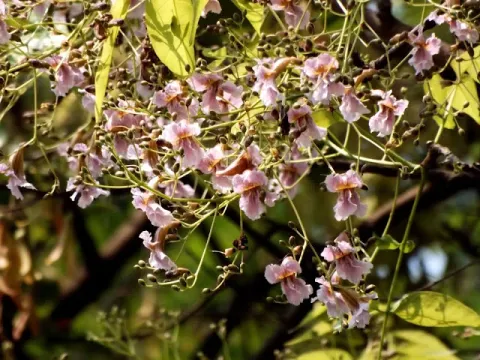
Stereospermum
Stereospermum
Stereospermum is a genus of tropical trees belonging to the Bignoniaceae family. These plants are native to tropical regions of Asia and Africa, where they grow in a variety of forest types ranging from deciduous to semi-evergreen.
What the section contains


Stereospermum
These trees require a tropical climate characterized by distinct wet and dry seasons. They perform best in deep, fertile soils that provide excellent drainage, ensuring that root systems are not subjected to waterlogging for extended periods.
Sunlight is critical for the development of Stereospermum species. While saplings may tolerate partial shade, mature trees require full exposure to direct sunlight to maintain a robust canopy and ensure prolific flowering and fruit set.
Agricultural management involves careful irrigation during the seedling stage, followed by reduced intervention as the trees establish a deep root system. Regular weeding in the early years prevents resource competition.
Propagation is primarily achieved through seeds. Treating seeds with proper storage conditions and ensuring clean sowing substrates significantly increases the germination success rate in nursery environments.
Pest management for Stereospermum includes monitoring for defoliating insects, such as various caterpillars and beetles that can drastically reduce leaf area in young stands.
Root rot caused by fungal pathogens remains a primary threat to nursery-raised plants. These diseases are often exacerbated by poor drainage and excessive humidity, requiring strict control over irrigation schedules.
Wood-boring insects can attack the main trunks of established trees, compromising the structural integrity and market value of the timber if infestation becomes widespread.
Preventative measures involve maintaining tree health through balanced nutrition and proper spacing, which helps in preventing the rapid spread of infections among adjacent trees.
Environmental factors, such as extreme moisture stress during the dry season, can also make these trees more susceptible to secondary opportunistic diseases and pathogens.
The primary economic use of Stereospermum is timber production. The wood is valued for its strength, durability, and resistance to environmental degradation, making it suitable for furniture and construction.
Certain species are highly regarded in traditional medicinal systems. The bark, roots, and flowers are harvested for their therapeutic properties, often used in anti-inflammatory and antiseptic preparations.
Seed collection is a vital harvest activity conducted to sustain reforestation efforts and ensure the availability of healthy germplasm for future planting seasons.
The timing of timber harvest is calculated based on the tree's growth rate and core density, which ensures that the wood has reached the required physical properties for structural use.
Sustainable harvesting practices are essential, especially when collecting medicinal raw materials, to ensure that the trees remain viable and capable of regenerating after the harvest process.