
Squarrose peat moss
Sphagnum squarrosum
Description
Growing requirements
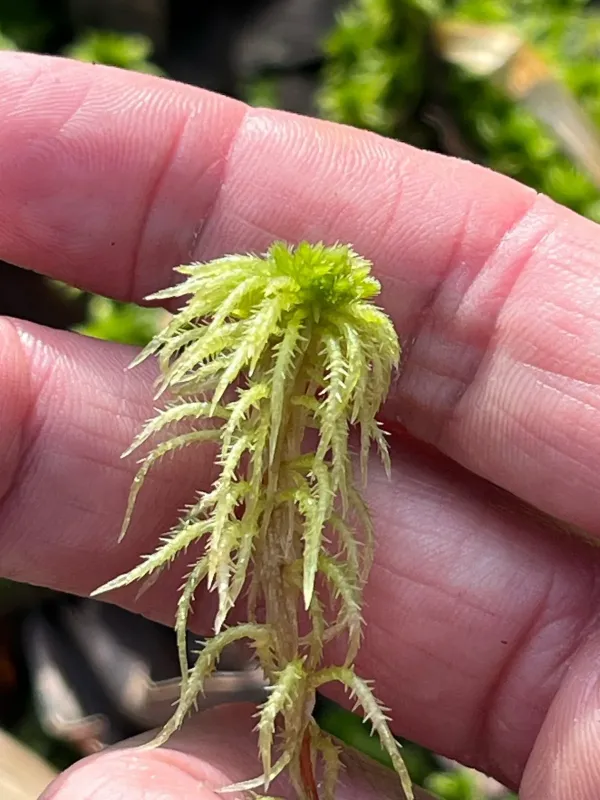
Squarrose peat moss (Sphagnum squarrosum) is a significant species in the Sphagnaceae family, known for its distinctively reflexed branch leaves that give it a unique, bushy appearance. It is native to various habitats in the Northern Hemisphere, typically found in nutrient-rich fens, swampy forests, and along the edges of peatlands.
Successful cultivation of this crop depends entirely on high humidity and water quality. It prefers acidic to neutral environments with low mineral content. Unlike some other moss species, it thrives in moderate shade, as direct, intense sunlight can rapidly dehydrate the plant and cause it to lose its structural integrity.
The soil requirement involves a moisture-retaining, low-nutrient substrate, such as sphagnum peat. It is essential that the growing medium remains consistently damp but not waterlogged to the point of oxygen depletion. Regular moisture supply is the single most important factor for vigorous growth in agricultural settings.
Temperature management is generally straightforward as the plant is hardy and adapted to temperate climates. However, in controlled environments, it is crucial to avoid extreme heat. The moss prefers cool to moderate temperatures, which helps maintain high humidity levels around the foliage and prevents excessive moisture evaporation.
Propagation is primarily achieved through vegetative fragmentation. Small pieces of healthy moss are spread over a moist surface, and under optimal humidity, they will develop into a dense, green carpet. Proper spacing and an initial period of high humidity are key to establishing a productive moss bed that can be harvested sustainably.
Yield
The primary horticultural application of Sphagnum squarrosum is as a high-quality, moisture-retentive substrate component. It is widely used for orchids, carnivorous plants, and greenhouse propagation, as it provides an excellent balance of water retention and airflow for root systems.
Its natural antiseptic properties are highly valued in plant breeding, particularly for rooting cuttings and protecting against soil-borne pathogens. By incorporating this moss into potting mixes, growers can significantly reduce the incidence of fungal issues and improve overall plant vigor.
In landscaping and ornamental sectors, this moss serves as an aesthetic ground cover in terrariums, vivariums, and shaded garden corners. Its ability to absorb and slowly release large amounts of water acts as a natural buffer, helping to stabilize moisture levels in the immediate environment of other plants.
Commercial yields are measured by the harvestable biomass of the moss. With proper management, including rotational harvesting and nutrient management, a single moss bed can produce multiple harvests. The shift towards sustainable and natural gardening products has increased the economic demand for clean, harvested peat moss.
Future potential lies in the integration of moss production into ecological restoration projects. By farming Sphagnum squarrosum, producers contribute to carbon sequestration and local microclimate regulation, adding a layer of environmental value to the agricultural business model.
Main diseases and pests
The most severe threat to cultivated squarrose peat moss is the presence of mineral salts or lime in the irrigation water. The moss absorbs minerals directly through its leaves, and an excess of calcium or other ions can quickly lead to cell death and the collapse of the moss carpet.
Fungal infections, often manifested as mold or mildew, are a constant risk in poorly ventilated greenhouses. Stagnant air combined with high moisture creates the perfect environment for pathogenic fungi to colonize the moss, which can rapidly lead to the loss of large patches of the crop.
Insect pests such as fungus gnats (sciarids) can pose a threat, particularly to the soft growing tips. Their larvae can cause physical damage to the plant stems, creating entry points for secondary infections and degrading the visual quality of the product, which is critical for ornamental uses.
Competition from more aggressive vascular weeds, such as grasses and sedges, is a common problem. These plants compete for light and nutrients, and if left unchecked, they can easily displace the moss colony. Regular monitoring and manual weeding are essential maintenance tasks for a professional grower.
Climatic instability, specifically prolonged heat waves and sudden decreases in air humidity, can be devastating. Without an automated misting or irrigation system, the moss has little protection against drying out. Once the moss reaches a point of total desiccation, it often requires significant time and effort to recover.