
Sphagnum russowii
Sphagnum russowii
Description
Growing requirements
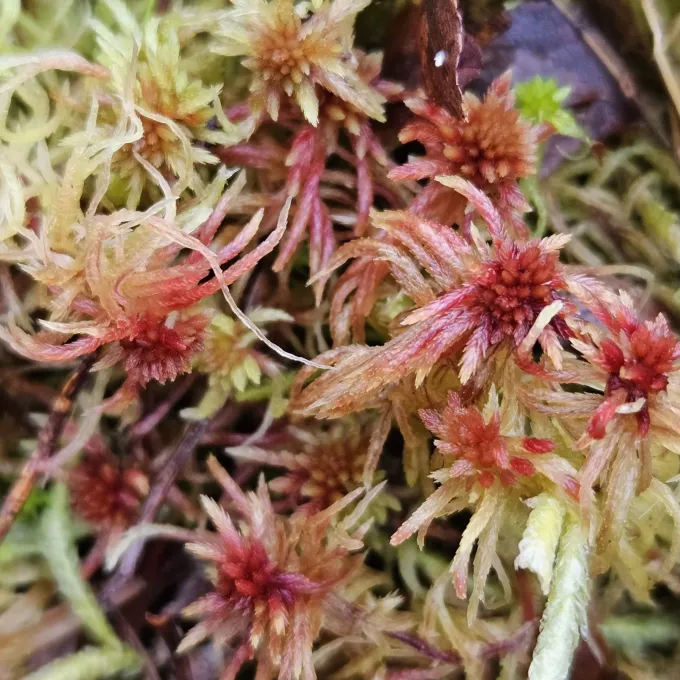
Sphagnum russowii is a member of the Sphagnaceae family, recognized for its distinct reddish-green appearance and modular structure. This bryophyte is primarily found in wetlands, peatlands, and moist forest floors, playing a vital role in ecosystem water regulation.
The culture requires an acidic environment, ideally with a pH range between 3.5 and 4.5. This acidity is essential to suppress competing flora and provide a sterile-like environment that supports the healthy growth of the moss.
Water quality is a critical factor for successful cultivation. It is highly sensitive to dissolved mineral salts, so the use of pure, soft water, such as rainwater or deionized water, is mandatory to prevent tissue necrosis and growth stagnation.
Consistent moisture levels are non-negotiable for this species. In agricultural settings, it requires a capillary-fed irrigation system that ensures the substrate remains moist without becoming waterlogged, which would lack necessary oxygen levels.
Partial shade is the preferred lighting condition. Direct, intense sunlight can rapidly dry out the moss, while low light will limit photosynthesis; therefore, maintaining a balanced, filtered light environment is key to maximizing biomass production.
Main diseases and pests
Desiccation is the primary threat to the health of a Sphagnum russowii crop. Once the delicate apical cells dry out, recovery is difficult, and prolonged exposure to air can lead to the death of entire patches of moss.
Inappropriate nutrient loading is another significant danger. Unlike vascular crops, sphagnum moss absorbs water and nutrients directly through its leaves, making it extremely susceptible to toxicity from fertilizers and high-salt water sources.
Fungal pathogens and mold growth can occur in environments with poor air circulation. Stagnant air combined with excessive humidity creates an ideal environment for infections that can destroy the integrity of the moss stems.
Vascular weed species compete aggressively for space and light. If not managed properly, these plants will shade the moss and outcompete it for available moisture, leading to a decline in the purity and productivity of the crop.
Physical disturbance and mechanical damage can lead to irregular growth patterns. Careful management and minimal trampling are necessary to maintain the structural uniformity and quality of the cultivated moss mat.
Harvesting
Harvesting is performed by carefully pruning the upper, living sections of the stems. By leaving the lower growth intact, producers ensure the rapid regeneration of the colony, allowing for sustainable, multi-year cultivation cycles.
Post-harvest processing involves thorough cleaning to remove organic debris, such as pine needles, leaves, or soil particles. High-quality products are characterized by a clean, uniform color and a soft, resilient texture when hydrated.
Drying must be gradual and conducted in well-ventilated, shaded areas. The goal is to reduce moisture content while preserving the structural integrity and the cellular ability to reabsorb large quantities of water upon rehydration.
Storage of the finished product requires breathable packaging to prevent heating and fungal colonization within the bulk material. Maintaining a dry, cool environment ensures the moss remains stable for long-term supply.
The product is highly valued in horticulture as a vital ingredient for potting mixes, particularly for orchids and carnivorous plants, due to its natural antibiotic properties and excellent aeration capabilities.