
Five-row peat moss
Sphagnum quinquefarium
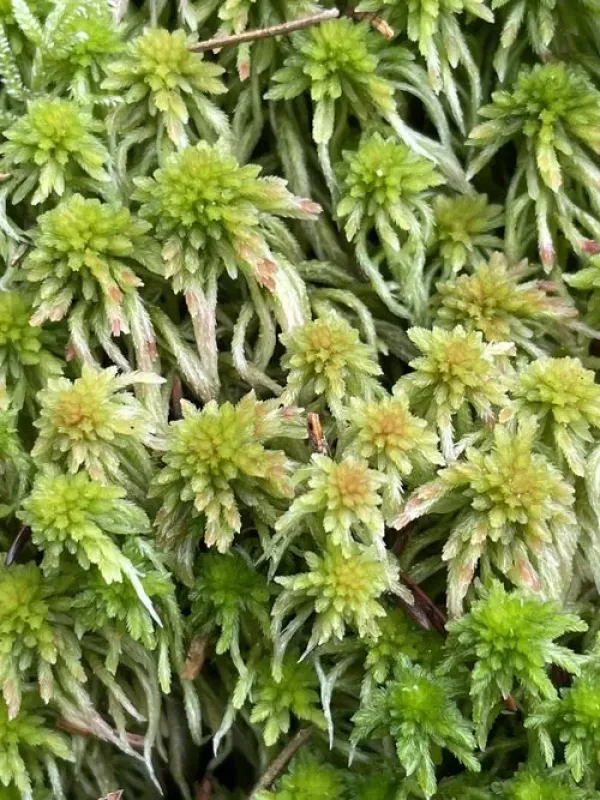
Description
Growing requirements
Sphagnum quinquefarium, commonly known as five-row peat moss, is a bryophyte belonging to the Sphagnaceae family. It is distinct for its ability to grow on somewhat drier, sloping terrains compared to other members of the genus.
The culture requires high humidity and constant access to soft water. Mineral-rich or hard water can be toxic to the moss, leading to the rapid accumulation of salts in the plant tissues and eventual necrosis.
Botanically, this species is identified by its fascicles of branches arranged in five distinct rows around the stem. This specific morphology facilitates effective vertical water transport, keeping the capitulum (top of the moss) hydrated.
Optimal environmental conditions involve low light levels. Cultivation under intense sunlight leads to rapid dehydration and bleaching of the chlorophyll, which effectively halts the growth process.
A consistent pH level between 3.5 and 4.5 is mandatory for sustained development. In agricultural settings, producers often use acidic peat-based substrates or specialized artificial liners to maintain this range.
Yield
The yield of Sphagnum quinquefarium is measured in terms of biomass density per square meter. Due to its slow growth rate, commercial production focuses on high-value niches rather than bulk agriculture.
The primary use is in the professional greenhouse industry as a premium substrate for orchids and carnivorous plants. Its antimicrobial properties help protect fragile root systems from pathogenic decay.
In the reptile industry, it serves as a substrate in vivariums to maintain high ambient humidity and provide a natural environment that does not easily succumb to mold when kept clean.
Horticulturalists also utilize it as an amendment in potting mixes. Its incredible water retention capacity makes it an ideal additive for plants that require both high moisture and high oxygenation in the root zone.
Sustainability is a core issue; harvesting must be done with manual care, often utilizing "farming" techniques that mimic natural succession to ensure the moss bed can regenerate over time.
Main diseases and pests
The most critical threat to Sphagnum quinquefarium is drought caused by regional climate change or drainage projects. Once the hydraulic continuity is broken, the moss cannot survive and is replaced by vascular plants.
Pathogenic fungi present a risk in humid, poorly ventilated environments. Without proper airflow, the dense mats of moss can become a breeding ground for various molds that cause rot in the lower layers.
Atmospheric pollution, specifically acid rain or high nitrogen deposition, severely inhibits the moss's growth. As a sensitive bio-indicator, the plant quickly reacts to air quality declines by losing its turgor pressure.
Over-harvesting without adequate rest periods leads to soil erosion and degradation of the habitat. Since the plant lacks a true root system, it relies entirely on the stability of the immediate micro-habitat.
Competition from taller vegetation is a constant stressor. If the soil becomes too nutrient-rich, invasive grasses or weeds will outcompete the slow-growing sphagnum for light and space.