
Sphagnum majus
Sphagnum majus
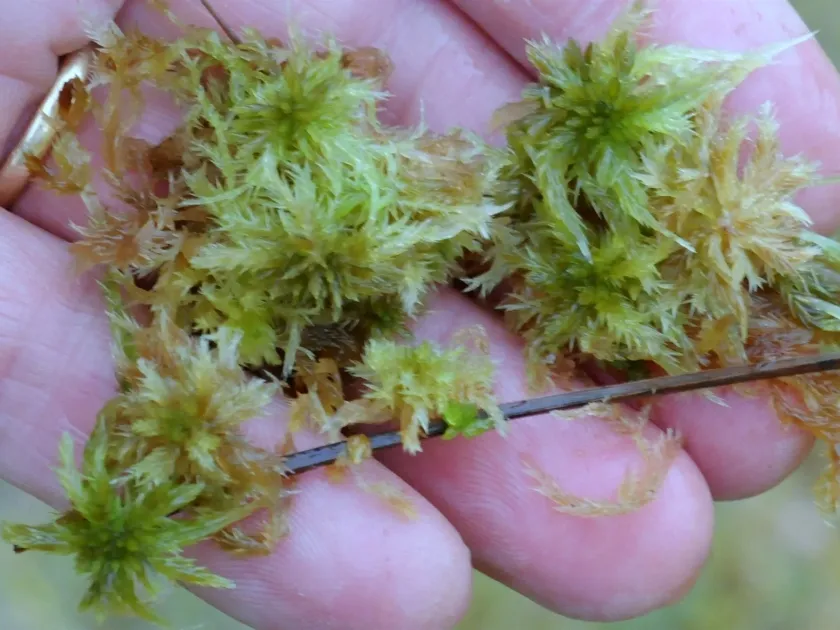
Description
Sowing dates
Sphagnum majus is a perennial moss species belonging to the Sphagnaceae family. Unlike conventional crops, it is propagated vegetatively by dividing existing moss mats or stem fragments, which are spread across prepared wetland sites.
The ideal time for establishing a moss plantation is in early spring. During this period, the substrate is highly saturated with water following snowmelt, providing the necessary conditions for successful establishment.
Propagation material is sourced from healthy, wild-growing populations. It is vital to ensure that the initial material is free from vascular plants, such as sedges or woody shrubs, which could outcompete the moss.
When planting, moss fragments should be evenly distributed over the surface of the peat substrate. Maintaining consistent contact with the moist soil surface is the most critical factor for survival and colonization.
Full establishment of the moss carpet typically takes several seasons. Success depends on the stability of the water table and the environmental conditions provided during the first year of growth.
Growing requirements
This species requires high levels of moisture, thriving in saturated or boggy environments. The water table must remain near the surface throughout the growing season to ensure continuous capillary water supply.
Sphagnum majus is highly adapted to acidic environments with pH levels ranging from 3.0 to 4.5. It is extremely sensitive to mineral salts; therefore, the use of chemical fertilizers is strictly prohibited.
Optimal growth occurs in open, well-lit areas, although it tolerates partial shade. The climate should be cool and humid, as high temperatures coupled with low humidity can lead to the desiccation of the moss.
The substrate must consist of low-decomposition peat, which provides excellent water-holding capacity and air circulation. Compaction of the substrate is detrimental, as it interferes with the moss's water balance.
- Consistent water saturation of the substrate surface.
- Acidic conditions (pH 3.0–4.5) without mineral supplementation.
- Cool temperate climate with high annual precipitation.
Yield
The productivity of a Sphagnum plantation is measured by the apical growth rate and the density of the moss carpet. Under optimal conditions, the annual vertical growth can reach 1 to 3 centimeters.
The yield of dry biomass depends on the hydrological stability of the site. A steady water table is the most significant factor in maintaining consistent production throughout the years.
Irrigation systems, such as misting, can significantly enhance yields during dry summer spells. This maintains the turgor of the hyaline cells, which are responsible for water absorption.
Harvesting strategies are limited by the need to maintain a viable mother layer for regrowth. Intensive harvesting should be practiced in cycles, allowing the moss to recover for several years between harvests.
The final product quality is determined by the moss's purity, hygroscopic capacity, and structural integrity, making it ideal for horticultural and medical applications.
Main diseases and pests
The primary threat to a moss plantation is the invasion of competing vegetation, such as vascular plants. These species can rapidly colonize and displace Sphagnum if water levels fluctuate or drop.
Fungal diseases may develop in areas with stagnant water or high temperatures. These pathogens can compromise the structural integrity of the moss mat, leading to localized die-off.
Water pollution, particularly the influx of nutrient-rich runoff or mineralized water, is highly toxic to Sphagnum. Such changes lead to rapid degradation of the Sphagnum carpet.
Extreme climate events, including prolonged droughts, pose a severe risk to the entire plantation. Desiccation kills the living growing tips, requiring a long period for natural recovery or replanting.
Improper harvesting techniques, which disturb the underlying peat layer, can cause irreversible erosion and prevent the plantation from recovering its initial productivity.
Harvesting
Harvesting is performed by carefully cutting the top living layer of the moss. This is usually done manually or with specialized machinery designed to protect the underlying peat layer from damage.
After collection, the raw material is cleaned of debris and contaminants. It is crucial to conduct this process in conditions that prevent the moss from drying out prematurely.
The harvested material must be dried in shaded, well-ventilated areas. Direct sunlight and high heat must be avoided to preserve the moss's natural antiseptic and water-holding properties.
Once dried and processed, the moss is used in professional horticulture, particularly for orchid cultivation, as a growing medium, or in medical dressings due to its absorbent nature.
Management involves a rotation system where parts of the plantation are harvested while others remain in a recovery phase. This ensures the long-term sustainability and profitability of the crop.