
Sphagnum fuscum
Sphagnum fuscum
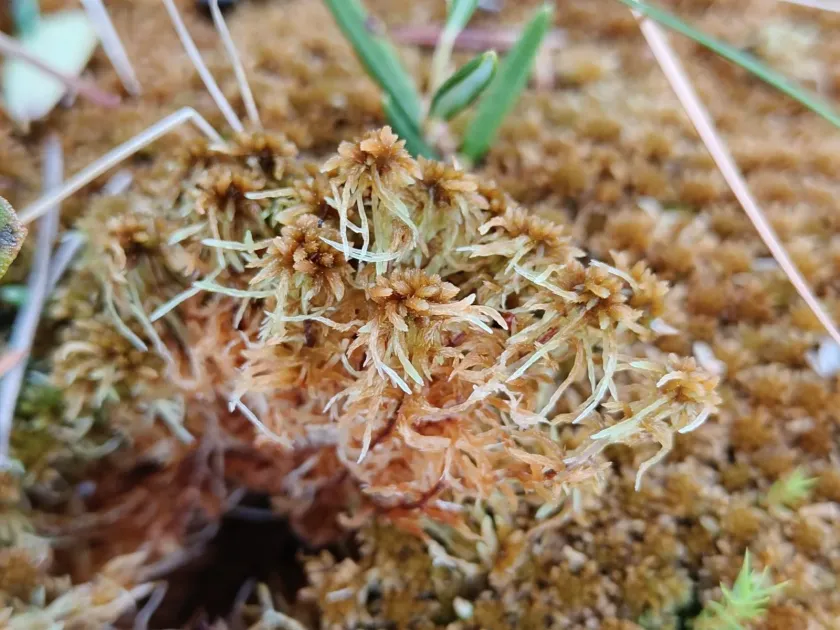
Description
Growing requirements
Sphagnum fuscum is a perennial moss species belonging to the Sphagnaceae family. It is a dominant species in raised bogs, where it forms dense, compact carpets or cushions that are easily distinguished by their brownish or yellowish-brown coloration.
This species thrives in highly acidic environments with a pH range typically between 3 and 4.5. Like other peat mosses, it lacks true roots and relies entirely on atmospheric deposition and capillary action to obtain water and essential mineral nutrients.
The optimal climate for this species is cool to temperate with consistently high atmospheric humidity. Its cellular structure allows it to hold vast amounts of water, which acts as a buffer during periods of limited precipitation, ensuring long-term survival.
Ecologically, Sphagnum fuscum is a critical carbon sink, playing a vital role in peatland development. Over time, its accumulation forms deep layers of peat, which is crucial for global carbon sequestration and hydrological regulation.
Cultivation strategies focus on maintaining precise water tables and soil acidity. In agricultural or horticultural settings, it is usually managed by restoring optimal hydrological conditions to encourage natural propagation and regrowth.
Yield
The primary horticultural application of Sphagnum fuscum is in the production of high-quality growing media. It is widely prized by orchid growers and carnivorous plant enthusiasts for its ability to retain moisture while providing excellent aeration.
Beyond its use as a substrate component, it serves as an effective natural mulch in greenhouse operations. It helps suppress weeds and regulates moisture levels around the base of moisture-sensitive ornamental plant species.
Historically and in specialized medical fields, it has been valued for its antiseptic and absorbent properties. These qualities make it a useful natural alternative for wound dressings in emergency or survival situations.
In modern aesthetics, the species is frequently utilized in terrariums, floristry, and vertical garden walls. Its ability to retain shape and color upon drying makes it a highly desirable element for long-lasting decorative displays.
Yields are inherently linked to the slow growth rate typical of bog ecosystems. Sustainable harvesting practices are essential to ensure the longevity of the population and to maintain the biodiversity of the peatland habitat.
Harvesting
Harvesting Sphagnum fuscum involves hand-collecting the top green or brownish portion of the moss. This method ensures that the lower, living parts remain intact, allowing the moss to regenerate over the following growing seasons.
After collection, the moss is cleaned of debris and foreign plant matter. Proper drying is crucial; it must be carried out in a well-ventilated area away from direct sunlight to preserve the integrity of its cell walls and absorptive capacity.
Storage requires cool, dry conditions to prevent premature moisture absorption or microbial growth. The material is typically packaged in compressed bales to maximize transport efficiency, as the moss will rehydrate immediately upon exposure to moisture.
Logistics require strict moisture control throughout the supply chain. Because of its incredible hygroscopicity, even a small amount of exposure to humidity can significantly increase the weight and volume of the shipment.
Quality control standards focus on color consistency, cleanliness, and the absence of mold. High-grade Sphagnum fuscum is essential for the professional horticultural sector, where consistency in moisture management is critical.