
Smilax smallii
Smilax smallii
Description
Growing requirements
Smilax smallii, commonly known as a type of greenbrier, is an evergreen climbing vine belonging to the Smilacaceae family. Native to the southeastern United States, this plant is well-adapted to woodland ecosystems and thrives in temperate climates.
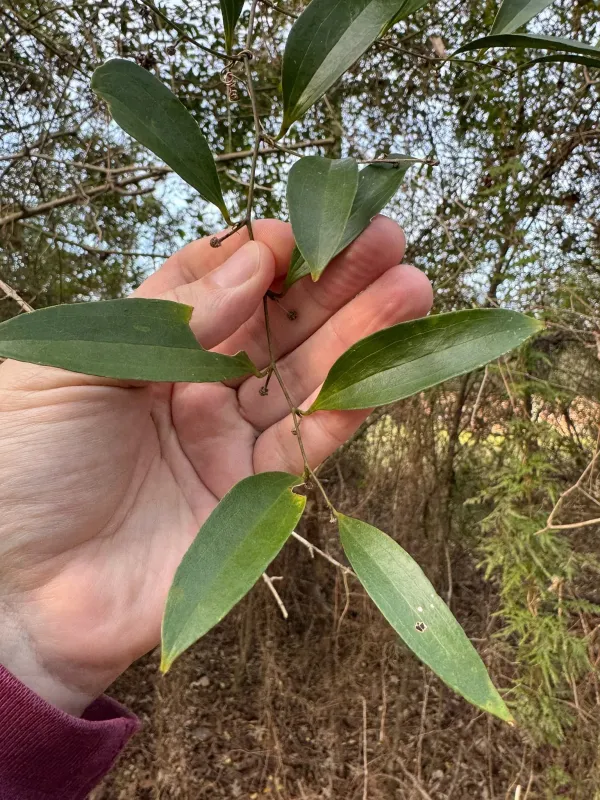
The plant is recognized for its tough, woody stems and glossy, lance-shaped leaves. Its ability to remain evergreen provides year-round aesthetic value, making it a popular choice for vertical gardening in favorable regions.
Cultivation requires fertile, well-draining soil that is rich in organic matter. Smilax smallii exhibits moderate drought tolerance once established, though consistent soil moisture is essential for vigorous leaf development during the growing season.
Regarding light exposure, the plant adapts well to partial shade to full sun. Providing a sturdy trellis or fence is crucial, as the vine uses specialized tendrils to anchor itself and reach vertical heights of several meters.
In landscaping, this species is highly valued for creating privacy screens and covering unsightly structures. Its hardy nature allows it to withstand various environmental challenges, provided it is not subjected to extreme frost or waterlogged soil.
Main diseases and pests
Smilax smallii is generally robust, but it can suffer from fungal issues if air circulation is limited. Powdery mildew is the most common concern, particularly in areas with high humidity and stagnant air.
Pests such as aphids and spider mites can occasionally affect the plant, especially during prolonged dry spells when the plant's natural defenses may be weakened by stress.
Effective management involves maintaining proper spacing between plants and implementing a consistent pruning regimen to remove overcrowded or weak growth that might harbor insects.
Chemical control should be a last resort; instead, environmental management and the use of horticultural oils are recommended to keep the plant healthy and aesthetically pleasing.
Early detection of pests and diseases through periodic inspection of the foliage is the best way to ensure the long-term success and vigor of the Smilax vine in a garden setting.