
Fringed greenbrier
Smilax bona-nox
Description
Growing requirements
Fringed greenbrier (Smilax bona-nox) is a perennial woody vine belonging to the Smilacaceae family, native to the southeastern United States. It is characterized by its stems, which are often armed with sharp, stiff prickles.
The plant demonstrates high adaptability to various climate zones, thriving predominantly in temperate and subtropical environments. It exhibits a remarkable tolerance for soil types, ranging from sandy loams to heavy clays, as long as drainage is adequate.
Regarding cultivation requirements, the species favors sites that provide structural support, such as fences or shrubs, allowing it to climb efficiently toward sunlight. It can survive in both full sun and deep shade conditions.
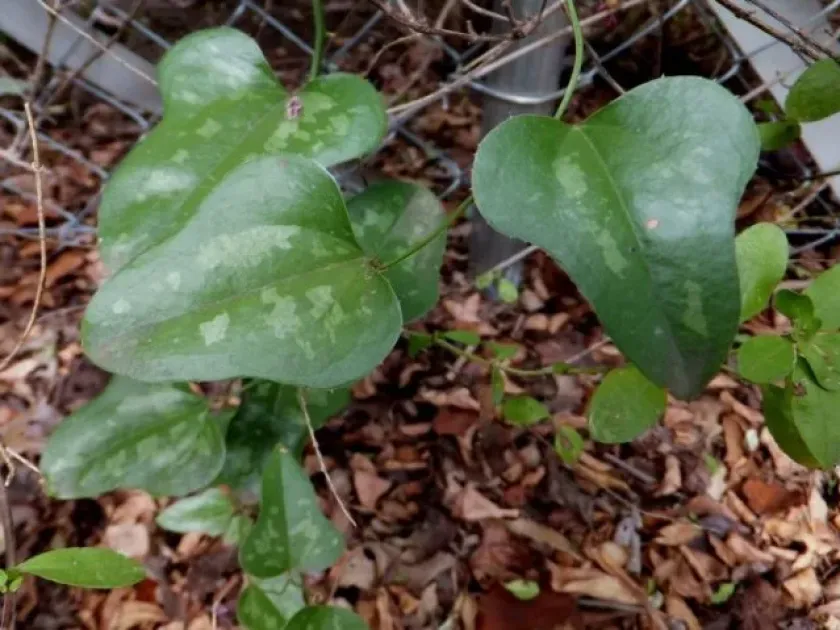
Botanically, it is recognized for its semi-evergreen foliage and thick, leathery leaves that provide excellent resilience against environmental stress. The vine's rapid growth is supported by an extensive underground rhizome system.
In agricultural settings, maintaining soil fertility is less critical for the species than managing its physical footprint, as its vigorous growth rate allows it to quickly overwhelm competing vegetation in favorable environments.
Main diseases and pests
Fringed greenbrier possesses an robust innate resistance to most common agricultural pathogens. It rarely suffers from significant fungal or bacterial infections that would require the application of fungicides.
The plant is seldom bothered by pests, although occasional minor damage from leaf-feeding insects may occur. These interactions rarely impact the overall vigor of the plant, which remains exceptionally hardy throughout the growing season.
The primary concern for farmers is the weed-like nature of the plant, as it can quickly become an invasive element in cultivated fields. Its rhizomes are persistent and difficult to eradicate once fully established in the soil.
Integrated weed management remains the most effective strategy, combining manual removal of root stocks and targeted application of herbicides during the active growth phases in spring and summer.
While often viewed as a pest, it plays a vital role in local ecosystems by providing cover and a steady food supply in the form of dark berries for numerous bird and mammal species inhabiting the fringe areas of agricultural lands.