
Ear-leaf greenbrier
Smilax auriculata
Description
Growing requirements
Smilax auriculata, commonly known as Ear-leaf greenbrier, is a perennial vine belonging to the Smilacaceae family. It is native to the coastal regions of the southeastern United States, where it thrives in sandy soils and open wooded habitats.
The plant is highly adapted to drought conditions due to its specialized tuberous rhizomes. From an agronomical perspective, it requires well-drained, porous soil types with a slightly acidic pH to achieve optimal growth and nutrient uptake.
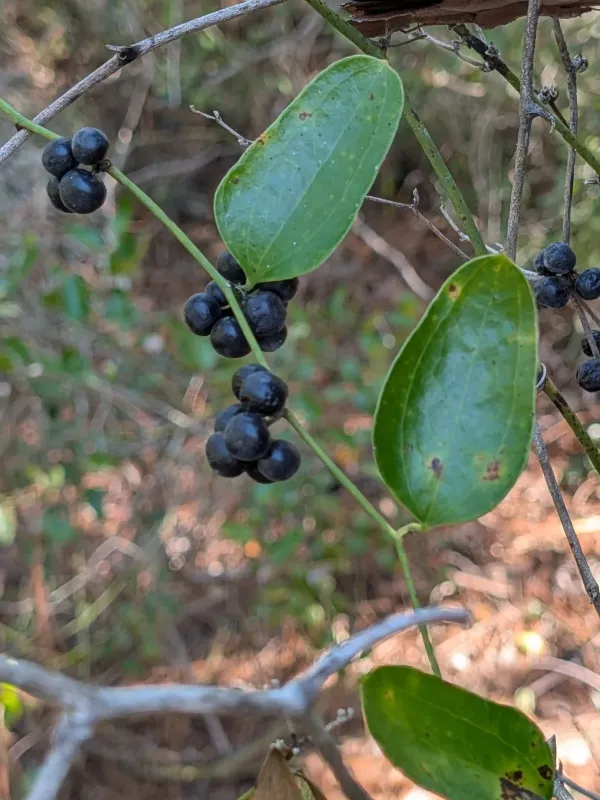
Botanically, the species is distinguished by its leathery, ear-shaped leaves and vine-like stems equipped with small prickles. It utilizes tendrils to climb, making structural support a necessary component of its cultivation in a commercial setting.
The climate requirements for Ear-leaf greenbrier include warm temperatures and protection from severe frosts. While it is naturally found in forest understories, it performs best in cultivation when provided with partial shade to prevent leaf scorching during peak heat.
Beyond its ornamental or wild value, Smilax auriculata has historical significance for its medicinal properties. The rhizomes are often harvested for compounds used in traditional health practices, and the young shoots serve as a seasonal culinary resource.
Main diseases and pests
The primary threats to Smilax auriculata include fungal pathogens such as leaf spot and root rot, which are often triggered by waterlogged conditions and poor air circulation. Proper spacing between plants is essential to mitigate these risks.
Insect pests, including aphids and spider mites, can damage the foliage and stunt the growth of young plants. Monitoring the underside of leaves is recommended for early detection of these pests during the vegetative stage.
Integrated pest management strategies should be employed, focusing on mechanical removal of infected parts and the maintenance of soil hygiene to prevent the spread of soil-borne pathogens.
Weed competition during the establishment phase poses a significant threat to young vines. Regular weeding or the application of organic mulch is recommended to suppress opportunistic species competing for water and nutrients.
Finally, physical damage to the stems from improper handling or unstable trellising can create entry points for secondary infections. Ensuring robust structural support is vital for long-term plantation health.