
Smilax balbisiana
Smilax balbisiana
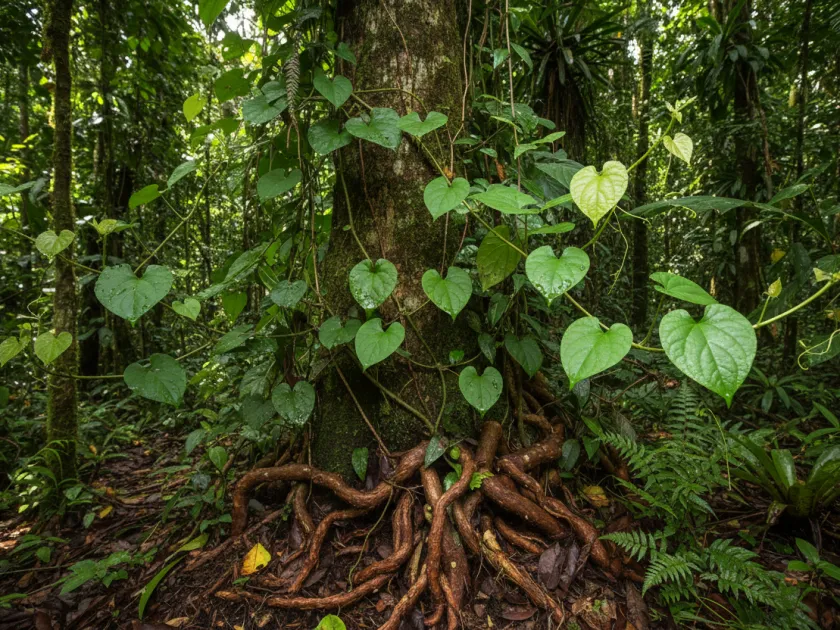
Description
Growing requirements
Smilax balbisiana is a perennial woody vine belonging to the Smilacaceae family. Native to the Caribbean, specifically Cuba and Hispaniola, this plant naturally thrives in the understory of tropical forests and on limestone substrates.
The plant is botanically identified by its trailing or climbing habit, facilitated by sharp thorns and tendrils. Its leathery, evergreen leaves are highly efficient at managing transpiration in humid, warm tropical environments.
Climate requirements strictly dictate a frost-free, tropical or sub-tropical setting. The plant prefers consistent temperatures ranging between 22°C and 30°C and requires a high relative humidity to maintain vigorous growth throughout the year.
Soil conditions should be well-drained and slightly alkaline, mimicking the plant's natural limestone-derived habitats. Waterlogging is detrimental, thus cultivation on raised beds with a significant organic amendment is recommended for optimal yield.
Agricultural management involves establishing sturdy vertical support structures to allow the vines to climb, which mimics their natural survival strategy and maximizes leaf surface area for carbohydrate production in the rhizomes.
Main diseases and pests
The primary threats to Smilax balbisiana cultivation are soil-borne pathogens, specifically fungi that thrive when the root zone is chronically over-saturated with moisture.
Pests such as scale insects and spider mites are prevalent in dense plantings. These pests drain sap from the stems and leaves, often leading to reduced vigor and stunted development of the medicinal rhizomes.
Leaf spot diseases caused by anthracnose can spread rapidly in plantations with poor airflow, causing significant foliage drop and weakening the overall plant structure.
Management of these threats relies heavily on proper spacing between rows to improve ventilation and the physical removal of infected plant material before the disease becomes systemic.
Integrated pest management is essential, focusing on biological controls rather than heavy synthetic chemical use to ensure the safety and quality of the medicinal roots extracted during harvest.