
Siebold's greenbrier
Smilax sieboldii
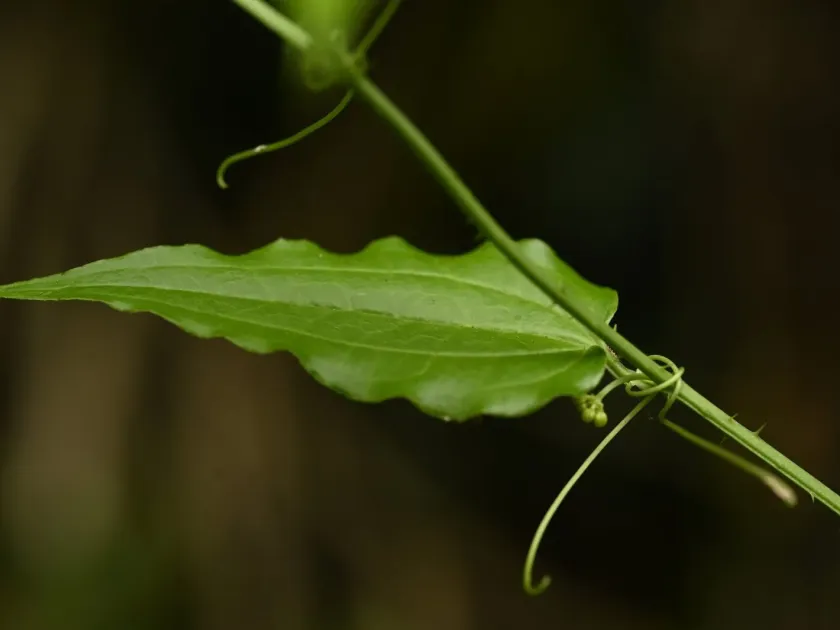
Description
Growing requirements
Siebold's greenbrier (Smilax sieboldii) is a perennial woody climber belonging to the Smilacaceae family. The species is native to East Asia, primarily found in Japan, Korea, and China, thriving in varied forest habitats.
The plant performs best in well-drained, fertile soils enriched with leaf mold or compost. It requires consistent moisture throughout the growing season but is intolerant of waterlogged soil conditions.
This climbing vine prefers a sheltered position in partial shade, mimicking its natural woodland understory environment. In open gardens, providing a sturdy trellis is essential for the plant to support its vigorous growth.
Climate requirements include protection from harsh, drying winds and extreme frost. While it exhibits moderate hardiness, mulching the base in late autumn is recommended to protect the root crown in colder temperate zones.
Propagation is typically achieved by division of the rhizomes in early spring. It can also be grown from seeds, although this method is slower and often requires a period of cold stratification to break dormancy.
Harvesting
The primary use for Smilax sieboldii is as an ornamental plant in gardens. It is highly valued for its elegant, climbing growth habit and its ability to create dense green screens on garden structures.
In various culinary traditions, the tender young shoots and leaves are harvested in spring. They are commonly prepared by blanching or stir-frying, providing a unique flavor profile often compared to wild asparagus.
Historically and within traditional medicinal practices, the rhizomes have been utilized for their secondary metabolites, including saponins, which are studied for their potential health-promoting properties.
When harvesting rhizomes for professional or domestic use, it is critical to ensure the plant is sufficiently mature, usually requiring a minimum of three years of growth before initial harvest.
Post-harvest processing involves cleaning the roots of all debris, cutting them into manageable sections, and ensuring rapid, uniform drying to prevent mold growth and preserve the chemical integrity of the material.