
Smilax quinquenervia
Smilax quinquenervia
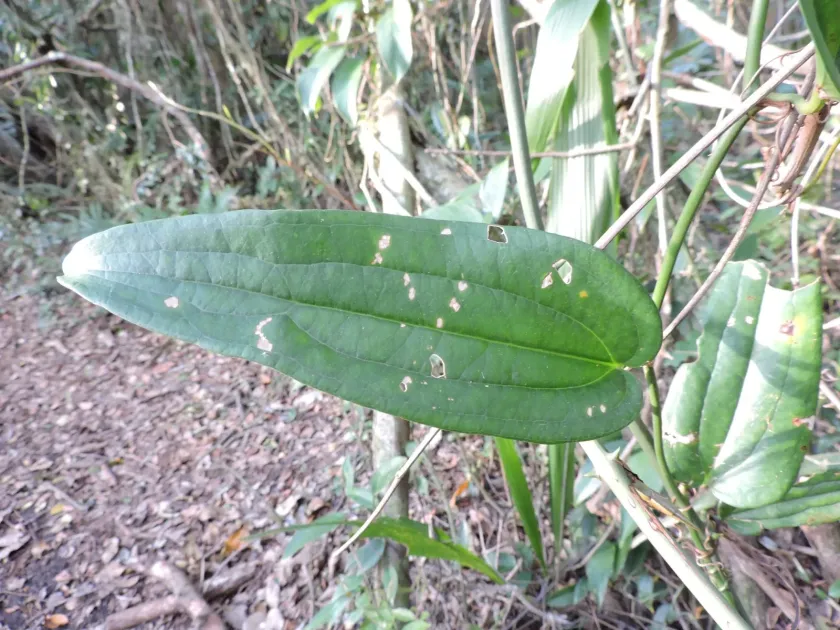
Description
Growing requirements
Smilax quinquenervia belongs to the Smilacaceae family and is a robust woody vine. Its native habitat is situated in tropical and subtropical regions where it thrives in dense, humid forests, utilizing its tendrils to climb and support its structure.
The plant requires high humidity and steady temperatures to maintain healthy growth. In a cultivation setting, providing a stable, warm environment is essential to prevent physiological stress, especially for young plants that are particularly sensitive to fluctuations.
Cultivation should take place in nutrient-rich, loamy soils that possess excellent drainage qualities. Waterlogging must be strictly avoided, as the root system, which is a critical part of the plant, is prone to rapid decay in saturated conditions.
Regarding agronomy, the implementation of a sturdy trellis system is vital. As a climbing plant, Smilax requires adequate physical support to expand vertically, which improves photosynthesis efficiency and simplifies the later stages of harvest.
Propagation is primarily achieved via vegetative methods such as rhizome division or stem cuttings. This practice ensures that the progeny maintain the desired chemical profile and morphological characteristics of the parent plants.
Main diseases and pests
Spider mites and scale insects represent the most significant pests for this crop. They tend to colonize the underside of the leaves, drawing sap and weakening the overall vigor of the plant.
Fungal pathogens causing root rot and leaf spots are common issues, typically exacerbated by poor aeration within the greenhouse environment. Maintaining hygiene is crucial for preventing outbreaks.
Crop protection strategies rely on integrated pest management, prioritizing cultural controls like proper spacing and airflow over heavy chemical interventions, especially when dealing with pharmaceutical-grade crops.
Early detection through frequent site inspections is the most effective defense. Removing infected plant debris immediately limits the spread of disease within the cultivated area.
Balancing moisture levels is the primary preventative measure against most soil-borne pathogens. Sensors for soil moisture and humidity are recommended for large-scale operations to ensure optimal conditions.