
Smilax ovalifolia
Smilax ovalifolia
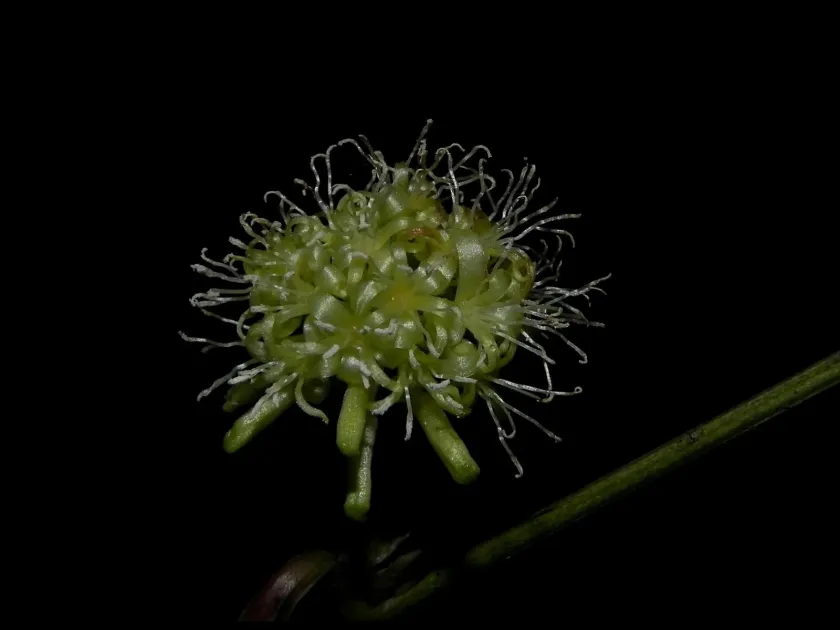
Description
Growing requirements
Smilax ovalifolia is a perennial, evergreen climbing shrub belonging to the Smilacaceae family. The plant is botanically recognized by its thick, woody rhizomes and stems often armed with prickles, which allow it to climb vigorously in dense forest environments.
Native to the tropical regions of India and South Asia, this plant thrives in humid conditions and varied altitudes. It is a key component of the understory vegetation, adapted to thrive under the canopy where light is filtered and moisture is relatively high.
Successful cultivation requires soil that is rich in organic matter, slightly acidic, and possesses excellent drainage capabilities to prevent root rot. It is essential to maintain consistent soil moisture throughout the growing season to ensure robust development of the rhizomes.
Temperature requirements are strictly tropical, with an ideal range of 20°C to 30°C. The species is highly sensitive to frost and extreme cold; therefore, in non-tropical climates, it must be grown in specialized glasshouses or indoor controlled environments.
Agricultural management involves providing stable structural support for the vines, which can grow several meters in length. Pruning is often employed to encourage lateral growth and to direct the plant's energy toward the development of the root system, which is the primary product of interest.
Harvesting
The primary harvest for Smilax ovalifolia consists of the plant's rhizomes, which are valued for their high concentrations of bioactive compounds. Harvesting is typically conducted after 3 to 4 years of growth to ensure the roots have reached sufficient maturity and size.
The digging process must be performed carefully to extract the entire rhizome mass without causing significant damage to the plant if multiple harvests are planned. Soil should be removed gently, followed by thorough washing to clean the raw medicinal material.
After extraction, the roots are sliced or chopped into smaller segments to facilitate drying. This stage is crucial, as the quality of the final product depends on rapid and uniform dehydration to prevent mold growth during storage.
Drying is generally performed in shaded, well-ventilated areas or in temperature-controlled drying ovens to preserve the chemical constituents. Direct sun drying is often discouraged to prevent the degradation of sensitive compounds within the plant material.
Once dried to the appropriate moisture content, the product is packaged in moisture-proof containers. Proper storage maintains the pharmacological integrity of the sarsaparilla-like material, making it ready for processing into extracts or tinctures.