
Laurel-leaf greenbrier
Smilax laurifolia
Description
Growing requirements
Laurel-leaf greenbrier (Smilax laurifolia) is a woody, evergreen vine belonging to the Smilacaceae family. Native to the southeastern United States, this plant is primarily found in wetland habitats, cypress swamps, and wet pine savannas.
The plant thrives in acidic, moist, and well-drained soils. It possesses a high tolerance for waterlogged conditions, making it an excellent candidate for damp areas where other crops might struggle with root rot.
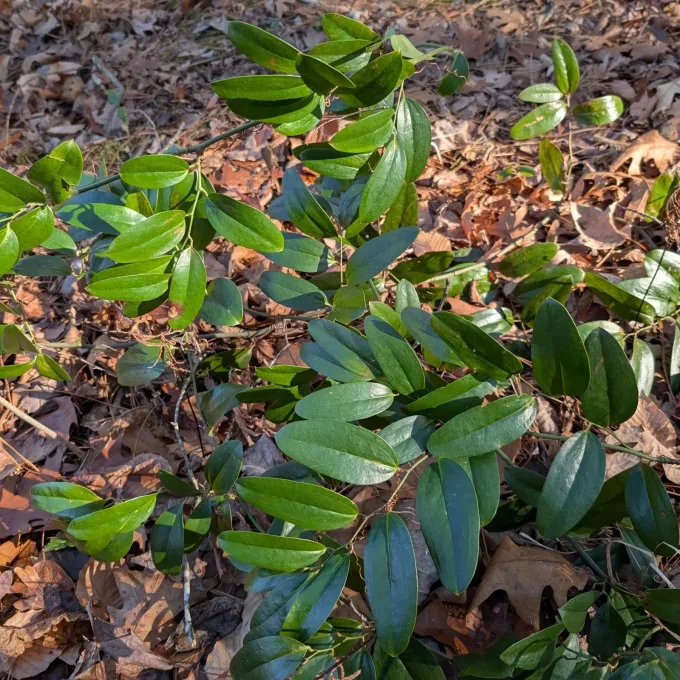
Botanically, it is identified by its thick, leathery, lance-shaped leaves that remain green throughout the year. The stems are characterized by sturdy, sharp prickles that provide structural support and defense against foraging herbivores.
In terms of climatic requirements, it prefers warm, humid environments consistent with temperate and subtropical zones. While it exhibits great shade tolerance, receiving partial sunlight encourages faster growth and denser foliage development.
Cultivation requires careful management of vertical space, as the vine uses tendrils to climb surrounding vegetation or trellis systems. Maintaining constant soil moisture is essential for the plant's health, particularly during the active growing season.
Main diseases and pests
Fungal leaf spot diseases are the primary threat, especially in stagnant or poorly ventilated environments. These pathogens can cause significant defoliation if left unchecked, reducing the plant's photosynthetic capacity.
Pest management focuses on controlling sucking insects, such as aphids and scale insects, which frequently target tender new growth. Infestations should be managed early to prevent systemic plant decline.
Weed competition can hinder the growth of young specimens, particularly in their early establishment phase. Keeping the root zone clear of invasive species allows the greenbrier to utilize available nutrients effectively.
Good cultural practices, such as proper spacing and cleaning of tools after pruning, significantly reduce the risk of disease spread. Monitoring the undersides of leaves is critical for spotting pests before they colonize the entire plant.
In cases of severe infestation or infection, targeted horticultural oils or biological control agents are recommended. Chemical interventions should always be treated as a last resort to maintain environmental balance.