
Bristly greenbrier
Smilax hispida
Description
Growing requirements
Bristly greenbrier, scientifically known as Smilax hispida, is a perennial woody vine belonging to the Smilacaceae family. It is native to North America, where it thrives in diverse habitats including deciduous forests, thickets, and riparian corridors, showcasing a high level of ecological adaptability.
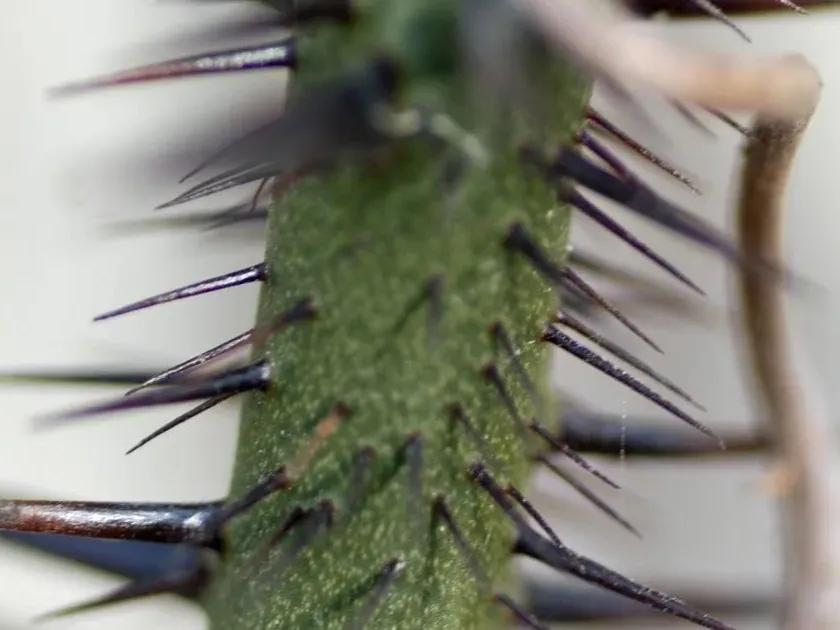
The plant is anatomically distinguished by its slender, flexible stems densely covered with numerous thin, needle-like prickles. These prickles serve as a defense mechanism and aid the plant in climbing over other vegetation using its specialized stipular tendrils.
Regarding soil requirements, the culture prefers moist, rich, well-draining soils with a slightly acidic to neutral reaction. While it is tolerant of various soil textures, the highest growth rates are observed in loamy soils abundant in organic matter.
Climate adaptability is a significant trait of this species, as it is capable of surviving in various temperate zones. It performs best in partial shade, mimicking its natural woodland habitat, although it can tolerate full sun provided the soil moisture is consistently maintained.
In terms of agricultural and horticultural use, Bristly greenbrier is utilized for naturalistic landscape designs and wildlife habitat restoration. Its dense foliage provides excellent cover for small birds and mammals, making it a valuable plant for ecological landscaping projects.
Main diseases and pests
The main pathological threat to Smilax hispida involves fungal diseases such as leaf spots and powdery mildew, often occurring during periods of high humidity and stagnant air. Proper site selection and spacing are critical cultural practices to mitigate these risks.
Insect pests, including various species of aphids and spider mites, can cause damage to tender new growth. Integrated pest management, focusing on early detection and targeted treatments, is recommended to maintain the health and vigor of the vine.