
Carrion flower
Smilax herbacea
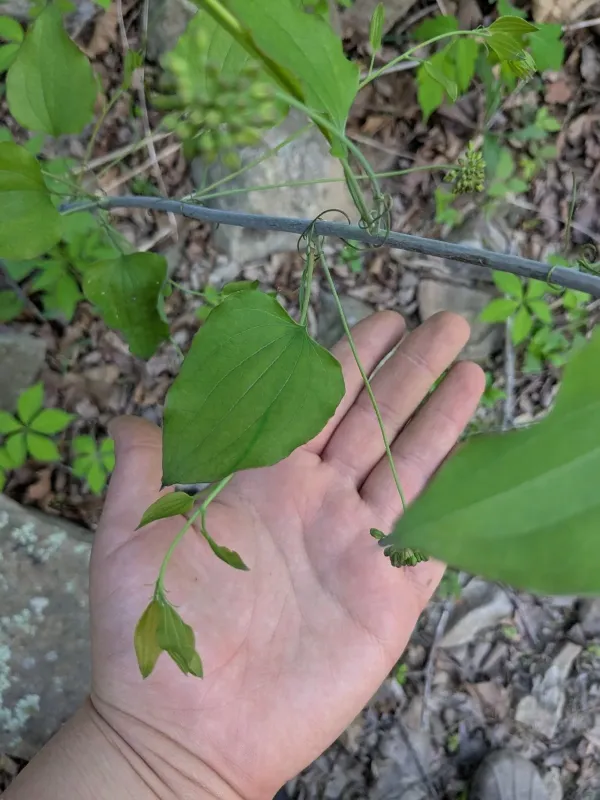
Description
Growing requirements
The carrion flower (Smilax herbacea) belongs to the Smilacaceae family. Unlike many other members of the genus, it is a herbaceous perennial that produces non-woody stems arising from a thick, fleshy rhizome every growing season.
Native to North America, the plant typically grows in moist woods, thickets, and along stream banks. It thrives in soils that are rich in organic matter, preferring a slightly acidic to neutral pH level that provides consistent moisture throughout the year.
Cultivation requires careful site selection, as the plant demands protection from the harsh midday sun while needing adequate light for vigorous growth. The species is highly cold-hardy, making it a reliable perennial in regions with distinct temperate winters.
Botanically, Smilax herbacea is characterized by its vining habit, using tendrils to climb nearby vegetation or artificial structures. Its leaves are broad, alternate, and smooth, which adds to the plant's aesthetic value in naturalistic landscape designs.
Agrotechnical management involves providing suitable trellises or supports to keep the stems elevated. Propagation is most effectively achieved through rhizome division during the dormant season, ensuring each section has healthy buds for future growth.
Main diseases and pests
The primary threats to Smilax herbacea include fungal infections such as leaf spots and root rots, which often occur when soil moisture levels are excessive or ventilation around the foliage is restricted. Poor air circulation is a major factor in disease spread.
Common pests include aphids and mites, which can infest the succulent foliage during dry spells. Integrated pest management, including regular inspection and the use of insecticidal soaps, is usually sufficient to maintain the plant's health in residential gardens.
To prevent disease outbreaks, gardeners should avoid overhead watering, which keeps foliage wet and promotes pathogen growth. Ensuring the site has proper drainage is the most critical step in preventing long-term damage to the plant's extensive rhizome system.
Soil-borne pests and competing weeds can also hinder growth. Keeping the planting area clear of invasive weeds helps reduce competition for nutrients and water, allowing the carrion flower to establish a strong root system during its initial years.
Economic and utility-wise, the plant is primarily valued for its ornamental appeal and ecological contributions. The dark, berry-like fruits provide a significant food source for various birds and small mammals, promoting biodiversity within the local ecosystem.