
Guiana smilax
Smilax guianensis
Description
Growing requirements
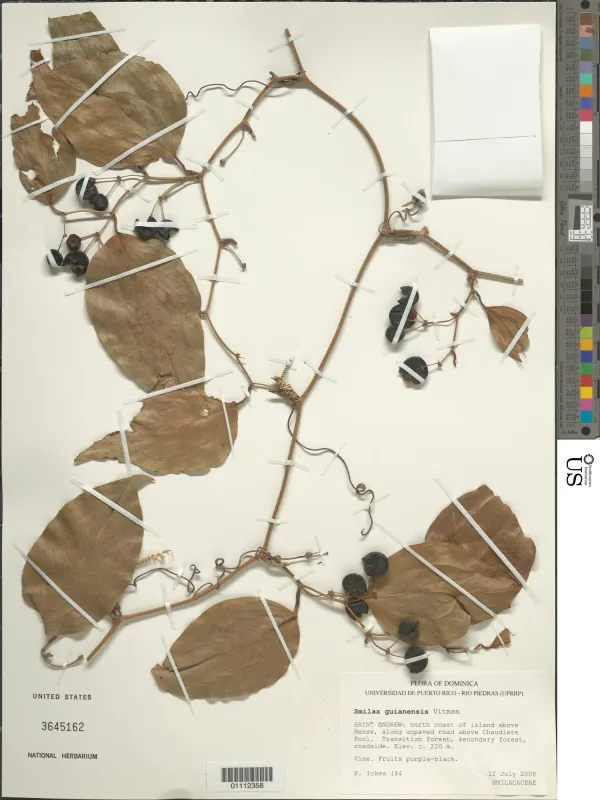
Guiana smilax (Smilax guianensis) is a perennial, woody climbing plant belonging to the Smilacaceae family. Native to the tropical rainforests of South America, this species thrives in humid environments and serves as a vital component of its local ecosystem.
The botanical structure of the plant features sturdy, thorny vines that climb by using tendrils, allowing it to reach upper forest layers. The foliage is typically evergreen, characterized by prominent venation and a leathery texture that protects it from moisture loss in dense tropical canopies.
For successful cultivation, the species requires a tropical climate with temperatures ranging from +22 to +28 degrees Celsius. It is highly sensitive to cold stress and frost, making greenhouse or indoor management necessary in temperate zones to maintain metabolic activity.
Soil requirements focus on high organic matter content, excellent drainage, and a slightly acidic to neutral pH. A mix of peat moss, pine bark, and perlite is often recommended to simulate the natural forest floor and ensure adequate root aeration for the plant.
Agrotechnical management requires the installation of robust support systems, such as trellises or mesh, to accommodate the vining habit. Pruning is essential to prevent overcrowding and to promote the development of new, healthy shoots, which are often the primary source of medicinal or economic material.
Main diseases and pests
The most common threat to Guiana smilax is root rot, caused by excessive soil moisture and poor drainage. This fungal issue quickly compromises the root system, leading to stunted growth or total plant loss if not identified early in the vegetative cycle.
Pests such as spider mites and scale insects represent a constant threat, particularly in enclosed environments where humidity fluctuations occur. These pests feed on sap, weakening the vine and potentially transmitting secondary pathogens through their feeding wounds.
Fungal leaf spots can also occur in high-humidity, low-airflow environments, manifesting as dark, irregular lesions on the foliage. Proper spacing and horizontal airflow are crucial preventative measures to reduce the development of these infections.
Invasive weed species may compete with young smilax plants for nutrients and light, necessitating consistent weeding or mulching. Providing a clean growing area during the establishment phase is critical for long-term productivity and overall crop health.
Integrated pest management (IPM) strategies, including the introduction of natural predators and the application of botanical insecticides, are recommended to preserve the plant's quality. Maintaining high sanitation standards during pruning is mandatory to prevent the spread of diseases between individual plants.