
Smilax corbularia
Smilax corbularia
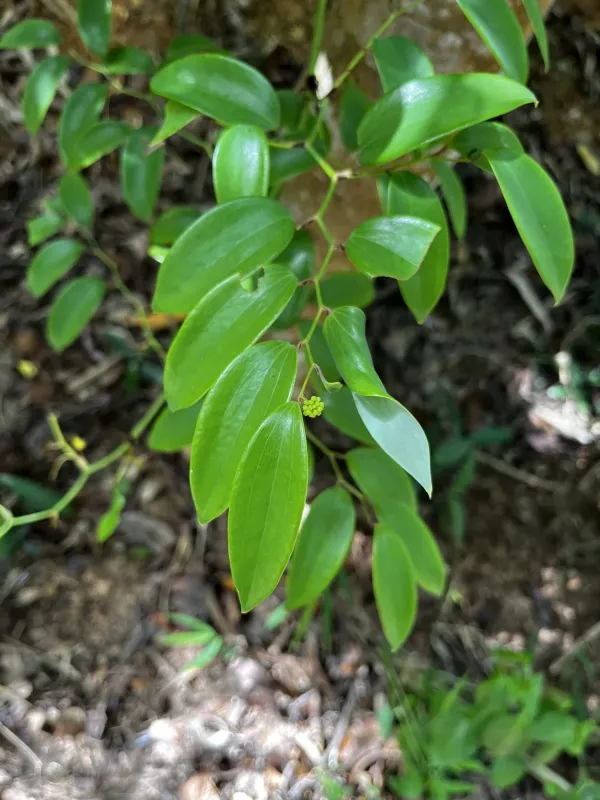
Description
Growing requirements
Smilax corbularia is a notable species within the Smilacaceae family, recognized primarily for its climbing habit and woody rhizomes. It is native to the tropical regions of Southeast Asia, where it thrives in humid forest understories and mountain slopes.
The cultivation of this crop requires a tropical climate with temperatures generally ranging between 20°C and 30°C. High atmospheric humidity is essential for the rapid development of its stems, which can reach several meters in length if appropriate support is provided.
Regarding soil requirements, the plant prefers well-aerated, loamy soils rich in leaf mold. Drainage is a critical factor for success, as waterlogging in the root zone can rapidly lead to fungal infections and the decay of the rhizome system.
Agricultural management involves regular pruning to stimulate the production of new growth and improve the accessibility of the root system. Providing a vertical trellis system is standard practice to maximize space efficiency in commercial plantation setups.
This species is highly valued for its medicinal properties, particularly for its traditional use in managing inflammatory conditions. The concentration of secondary metabolites in its roots makes it a significant crop for regional and international herbal markets.
Harvesting
Harvesting Smilax corbularia is a cyclical process, typically occurring every three to five years to ensure the roots have developed sufficient biomass and chemical potency. The extraction of rhizomes is performed manually to prevent mechanical damage to the plant stock.
Once extracted, the rhizomes are washed to remove debris and soil particles. This cleaning process is crucial to ensure the purity of the raw material, which is later sorted by size and maturity before moving to the drying facility.
Drying is conducted in controlled environments, maintaining a temperature range that prevents the degradation of thermolabile compounds. Uniform drying is necessary to ensure the final product has a moisture content below the critical threshold for microbial growth.
Quality control standards during the harvest involve testing for active substance content, such as saponins and flavonoids, which are the main commercial drivers for the species. Adherence to these standards guarantees a premium price for the product.
Storage of the processed root requires dry, cool conditions and protection from light to maintain shelf-life. Proper packaging, such as jute or woven bags, ensures that the quality remains consistent until the material reaches the processing plant.