
China root
Smilax china
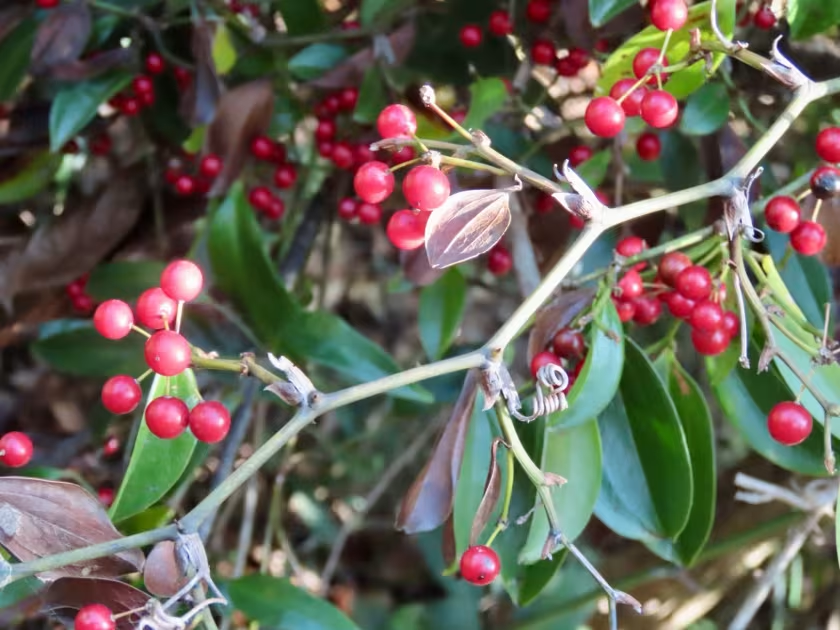
Description
Sowing dates
China root is typically propagated by seeds or through the division of its woody rhizomes during the dormancy period in early autumn or spring.
Seeds require a significant period of cold stratification, often lasting several months, to break dormancy and ensure successful germination in the following season.
For commercial cultivation, greenhouse sowing is preferred to ensure a controlled environment, which helps in achieving higher survival rates of the delicate seedlings.
Transplanting to the permanent field site should be performed once the plants have developed a sufficiently strong root system and are at least 20 cm in height.
Proper spacing is crucial; plants should be spaced at least one meter apart to allow for vigorous growth of the vines and to prevent overcrowding in the rows.
Growing requirements
Smilax china belongs to the Smilacaceae family and is an evergreen or deciduous climbing shrub, naturally found in the temperate and subtropical forests of East Asia.
The crop thrives in well-drained, sandy loam soils that are rich in organic matter. Good drainage is essential to prevent the accumulation of water, which leads to root rot.
While the plant prefers a neutral pH, it can adapt to slightly acidic or alkaline conditions if the soil structure remains loose and aerated throughout the growing season.
The plant performs best in a position with partial shade, especially during its younger stages, although it can tolerate full sun as it matures and establishes.
Consistent moisture is key during the first years of development. Farmers should implement irrigation systems to maintain soil humidity during dry summer months.
Yield
The economic value of China root lies primarily in its thick, tuberous rhizomes, which are harvested for their medicinal compounds including saponins and phenolic acids.
Yields are typically harvested from plants that are at least four to five years old, as this is when the concentration of bioactive ingredients is at its peak.
Using trellis systems to support the climbing vines can significantly increase the total yield by providing better light penetration and airflow for the entire plant.
Regular application of balanced fertilizers during the active growth season helps in maximizing the weight of the rhizomes, leading to more productive harvests.
Sustainable agricultural practices, such as crop rotation, ensure that the soil remains fertile, which directly translates to improved quality and weight of the roots.
Main diseases and pests
Excessive humidity in the root zone is the primary cause of fungal diseases, such as Fusarium wilt or root rot, which can devastate a plantation if left unmanaged.
Common pests affecting Smilax china include aphids and spider mites, which can cause severe damage to young foliage and weaken the plant during hot, dry weather conditions.
- Monitor fields weekly to detect early pest infestations.
- Implement integrated pest management by encouraging natural predators.
- Apply organic fungicides only when strictly necessary.
Weed control is essential, especially in the first two years of the plantation, as weeds compete aggressively for sunlight, moisture, and soil nutrients.
Winter hardiness is a major concern in colder regions, requiring specific protection methods to prevent the rhizomes from freezing and losing their viability.
Harvesting
The harvest cycle is concluded in late autumn when the vine's top growth dies back and the plant enters a state of dormancy, concentrating nutrients in the roots.
The rhizomes are carefully unearthed using manual tools to avoid mechanical damage, which could lead to contamination and degradation of the stored medicinal components.
Post-harvest processing involves thorough cleaning of the roots, followed by cutting them into smaller pieces to facilitate efficient drying in specialized facilities.
Drying is a critical step where temperature must be carefully controlled, ideally staying below 45 degrees Celsius to preserve the delicate chemical composition of the root.
Once dried to the correct moisture content, the final product is stored in airtight, moisture-proof containers in a cool environment to maintain its shelf life for medicinal use.