
Canary smilax
Smilax canariensis
Description
Growing requirements
Canary smilax is a vigorous evergreen woody vine belonging to the Smilacaceae family. Native to the Canary Islands and Madeira, this plant thrives in the unique microclimates of laurel forests, where it benefits from moderate temperatures and high humidity levels throughout the year.
For successful cultivation, the plant requires well-draining, humus-rich soil that maintains a slightly acidic pH. Effective water management is crucial for the root system, as the plant is susceptible to root rot if the substrate remains waterlogged for extended periods, necessitating careful soil preparation.
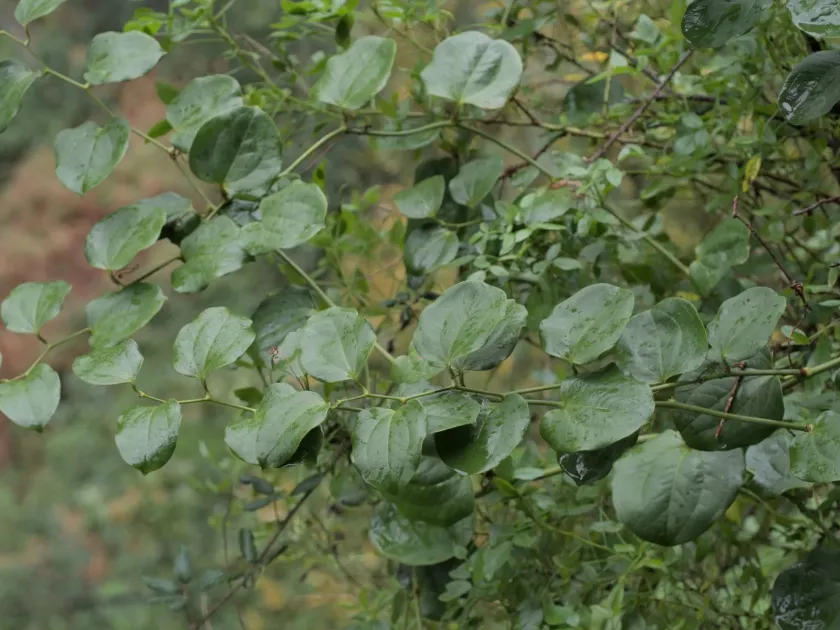
Botanically, the plant features robust, spiny stems and leathery leaves with distinctive venation. It utilizes modified stipules as tendrils to climb and secure itself to vertical structures, making it a highly effective species for green walls and managed canopy structures in suitable climates.
Canary smilax prefers partial shade or dappled sunlight; excessive exposure to direct heat can cause leaf scorch and dehydration. Providing a sheltered environment protected from harsh winds is essential for maintaining the integrity and aesthetic quality of the foliage.
Propagation is primarily achieved through seed germination, which requires a stratification period to break dormancy, or via semi-hardwood cuttings. Success in propagation relies on maintaining a controlled environment with stable temperatures and appropriate moisture levels for root initiation.
Main diseases and pests
The plant is frequently targeted by sucking pests such as scale insects and spider mites, which can significantly debilitate the vine if left unchecked. Integrated pest management strategies, including regular monitoring and the use of insecticidal soaps, are recommended for control.
Fungal pathogens such as root rot and leaf spot are common threats in environments with poor air circulation or excessive moisture. Maintaining adequate space between individual plants and ensuring proper drainage are the most effective preventative measures against these diseases.