
Senna siamea
Senna siamea (Lam.) H. S. Irwin & Barneby
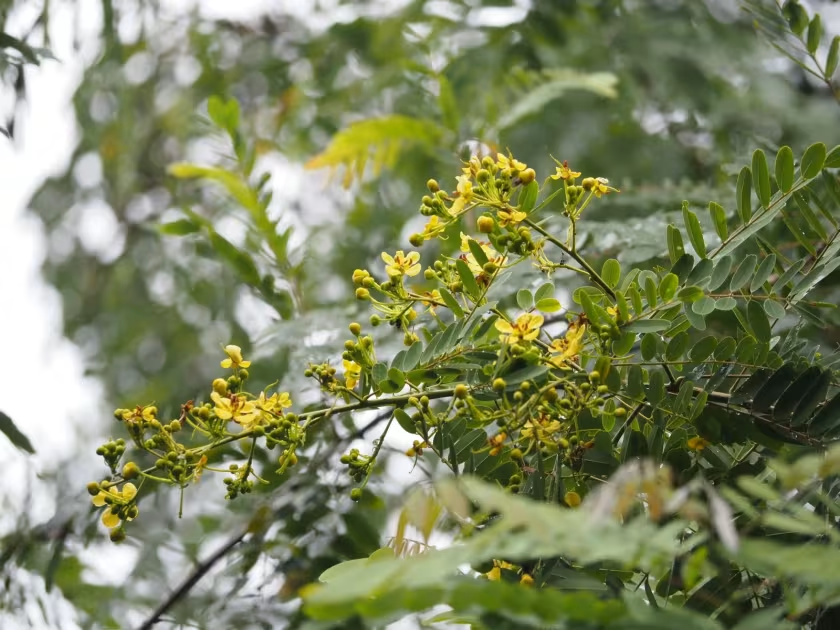
Description
Sowing dates
Senna siamea is typically propagated via seeds, which are known for their high germination rate. It is advisable to soak seeds in warm water for 24 hours before sowing to break dormancy.
The seeds should be sown in nursery beds or individual containers filled with well-draining soil. Providing shade to young seedlings during their first few weeks is crucial for their survival.
Transplanting to the field is most successful at the onset of the rainy season, ensuring the young trees have sufficient water to establish deep root systems before the dry season begins.
Spacing for plantations varies based on the goal: closer spacing for windbreaks and wider spacing for timber production. Generally, a spacing of 2x2 or 3x3 meters is recommended for forestry.
Young plants exhibit rapid vertical growth, often reaching a significant height within the first year if they are protected from weeds and intense direct sunlight during the establishment phase.
Growing requirements
This species belongs to the Fabaceae family and is a robust evergreen tree adapted to tropical climates. It performs best in regions with high temperatures and moderate to heavy rainfall.
While the tree is quite adaptable to different soil types, it prefers deep, fertile, and well-drained loams. It can tolerate acidic soils but struggles in waterlogged conditions.
Senna siamea requires plenty of sunlight and does not thrive in areas with heavy competition from other fast-growing vegetation. Full sun exposure is necessary for maximum biomass production.
The tree is moderately drought-tolerant once established, but it lacks frost resistance. It is strictly a tropical to sub-tropical species that cannot survive freezing conditions.
- Climate: Tropical, humid.
- Temperature Range: 20°C – 30°C.
- Altitude: 0 – 1500 meters above sea level.
- Annual Rainfall: 500 – 2000 mm.
Yield
The primary yield from Senna siamea is its high-quality timber, which is dense, heavy, and naturally resistant to decay, making it suitable for furniture and construction.
In agroforestry systems, the tree serves as a valuable nitrogen-fixing species, enhancing the soil quality for surrounding crops through leaf litter decomposition.
The biomass (leaves and twigs) can be harvested and used as green manure or mulch, providing essential organic matter and nutrients to the agricultural fields.
Yields of timber are heavily dependent on the management practices employed, including thinning and pruning, which allow the best-performing trees to attain a larger diameter.
Production cycles typically span 15 to 20 years for timber maturity, though intermediate yields from pruning can be obtained much earlier in the growth cycle.
Main diseases and pests
Senna siamea is generally resistant to many common pests, but it may be susceptible to defoliating insects that can cause significant leaf loss during the peak growing season.
Root rot caused by fungal pathogens is a potential issue in poorly drained soils. Improving soil aeration is the most effective preventative measure against this threat.
Young plantations are highly vulnerable to browsing by livestock and wild animals. Proper fencing is essential for the first three years of tree development.
Maintaining a clean plantation floor by controlling weeds is important, as weeds can host pests or compete with the trees for essential moisture and soil nutrients.
Monitoring for signs of stress or pest infestations is recommended, particularly during transition periods between the wet and dry seasons when the trees are most vulnerable.
Harvesting
Timber harvest involves clear-cutting or selective harvesting of mature trees. The wood must be processed quickly to avoid splitting during the drying process.
Green biomass is harvested through regular pruning, which can be done manually. This practice promotes bushy growth and higher leaf production for soil enrichment.
Seeds are harvested from the pods once they turn deep brown. They should be cleaned and stored in a cool, dry place to maintain their viability for future seasons.
Efficient post-harvest handling of biomass involves shredding or chipping the material to speed up its decomposition when applied to the soil as mulch.
Effective plantation management requires a rotation plan, ensuring that the harvest of timber does not lead to total site clearance if regenerative practices are desired.