
Senna spectabilis
Senna spectabilis (DC.) H. S. Irwin & Barneby
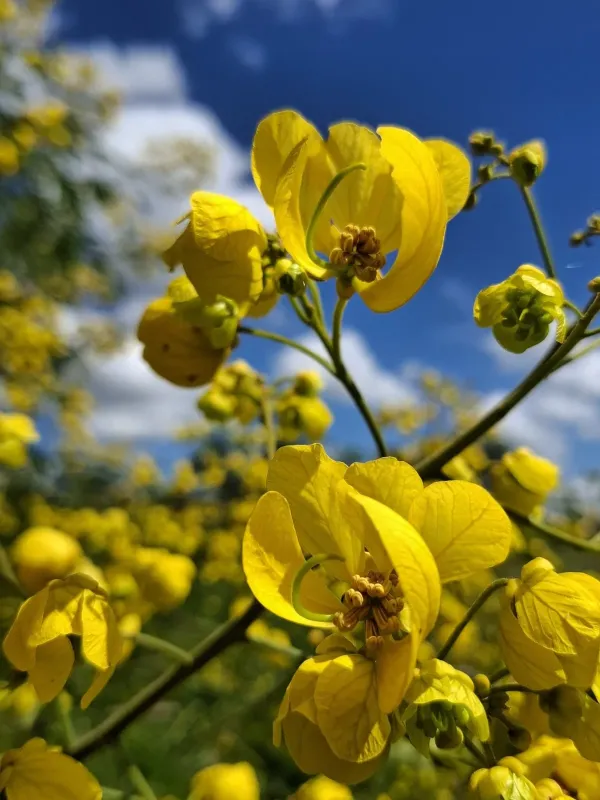
Description
Sowing dates
Propagation of Senna spectabilis is primarily performed through seeds, which possess a hard seed coat. Scarification is required to ensure consistent and rapid germination.
Seeds should be sown in a well-draining nursery medium at temperatures between 22 and 26 degrees Celsius. Depth of planting should be approximately 1 to 2 centimeters.
Seedlings emerge within two to three weeks under conditions of high humidity and adequate light. Proper moisture levels must be maintained to support early root development.
Transplanting into individual containers occurs after the appearance of the first true leaves, allowing the plant to build a robust root system before outdoor placement.
Vegetative propagation via semi-hardwood cuttings is possible but requires professional application of rooting hormones to achieve successful establishment.
Growing requirements
Senna spectabilis is a member of the Fabaceae family, native to tropical regions of the Americas. It is widely recognized as a tree of high aesthetic value.
The tree thrives in full sun, requiring exposure to direct sunlight for the majority of the day. Insufficient light leads to stunted growth and poor flower production.
Soil requirements focus on fertility and drainage. The species adapts well to various soil textures but suffers significantly in waterlogged or anaerobic conditions.
Climate needs are strictly tropical or subtropical. Senna spectabilis lacks frost tolerance, and cold stress causes severe damage to its canopy and overall vitality.
Regular irrigation is essential during the establishment phase, while mature specimens demonstrate a degree of drought tolerance once their root system is deeply anchored.
Main diseases and pests
Root rot remains the most significant disease risk, particularly when soil drainage is insufficient or irrigation management is poor during rainy seasons.
Pest issues include lepidopteran larvae which can defoliate the tree. Early detection is crucial to prevent substantial damage to the ornamental value of the leaves.
Sap-sucking insects like aphids can cluster on young shoots, potentially serving as vectors for viral pathogens if left unmonitored for extended periods.
Integrated pest management, including regular tree inspection and the use of eco-friendly biological controls, is highly recommended for suburban landscapes.
Sanitation practices, such as pruning damaged or decaying branches, remain the most effective preventive measure against localized outbreaks of fungal infections.
Harvesting
The primary utility of Senna spectabilis lies in ornamental landscaping. Its intense golden floral display makes it a preferred choice for parks and urban centers.
Ecologically, the tree serves as a valuable nectar source for pollinators, significantly contributing to local biodiversity in tropical and subtropical garden ecosystems.
While not a primary source for commercial timber, the wood is durable and occasionally utilized in local craft industries for small-scale wood products.
Seed collection is performed after the pods dry and turn brown. Careful processing ensures that the seeds are viable for future nursery production cycles.
The biomass generated from routine maintenance prunings can be repurposed as organic mulch, enriching the soil with necessary nutrients for other garden vegetation.