
Senna alata
Senna alata (L.) Roxb.
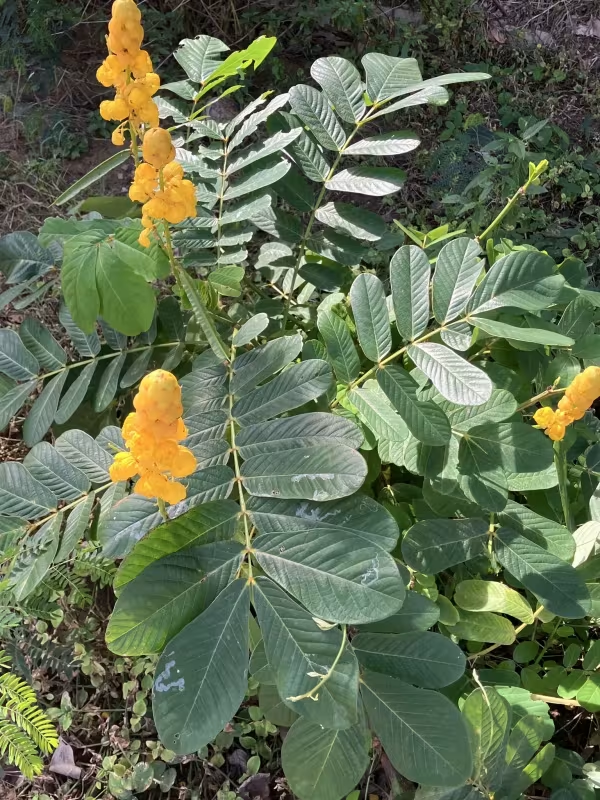
Description
Sowing dates
In tropical regions, sowing Senna alata is typically timed with the onset of the rainy season, which provides the seeds with the necessary moisture for rapid germination. In temperate climates, seeds should be sown in nursery trays in heated greenhouses about 8-10 weeks before the last expected frost.
Seeds require scarification before planting because they possess a hard seed coat that hinders water absorption. Soaking the seeds in warm water for 24 hours significantly improves germination rates and ensures more uniform seedling emergence.
The optimal planting depth is 1-2 centimeters, ensuring the plant has enough energy reserves to develop its first pair of true leaves. The seedling medium must be loose, well-draining, and enriched with organic compost.
Once seedlings reach a height of 15-20 centimeters, they can be transplanted into their permanent outdoor locations. It is crucial to maintain spacing of 1 to 1.5 meters between plants, as this species is a vigorous grower that develops an extensive canopy.
As a fast-growing shrub, commercial plantations should be planned with density in mind, ensuring sufficient aisle space for machinery to manage maintenance and facilitate the harvest of medicinal biomass.
Growing requirements
Senna alata, a member of the Fabaceae family, is a typical tropical species with specific temperature requirements. For optimal growth, the plant needs a mean daily air temperature ranging between +22°C and +30°C.
The plant thrives in sunny locations protected from strong winds, as its large pinnate leaves can be damaged by mechanical stress. While it originates from the tropics, it adapts well to partial shade, although this may reduce the intensity of its flowering.
The plant is not overly demanding regarding soil type; however, the highest biomass yields are achieved in well-drained loamy soils. The soil pH should be neutral to slightly acidic, ideally in the range of 6.0 to 7.0.
Special attention must be paid to soil moisture. While the plant requires regular irrigation during dry spells, it is highly sensitive to waterlogging, which can cause root rot. During the peak growing season, regular nitrogen-phosphorus fertilization is recommended.
This species possesses a unique nitrogen-fixing ability through symbiosis with root-nodule bacteria, making it a valuable asset in agroforestry systems and a natural way to improve soil fertility in cultivation plots.
Yield
The economic value of Senna alata is focused on its medicinal raw materials, specifically the leaves, bark, and roots, which contain active anthraquinones. Biomass yields depend heavily on management practices and consistent moisture during the vegetative phase.
The first commercial harvest of leaves can be conducted 6 to 8 months after planting, once the shrub reaches sufficient biomass. Under intensive farming conditions, two to three harvests per season are possible without compromising the plant's health.
The biological quality of the material is determined by the concentration of active compounds, which peaks at the onset of flowering. During this stage, the plant contains the highest levels of chrysophanic acid and emodin, both widely used in the pharmaceutical industry.
Production also includes seed harvesting, which takes place as the long, winged pods mature. Seeds are collected once they turn dark and dry naturally on the branches, which prevents the pods from splitting prematurely.
Proper drying of the raw material in shaded, well-ventilated areas is essential for preserving the plant's therapeutic properties, a critical factor for the quality of goods supplied to pharmaceutical processing facilities.
Main diseases and pests
Senna alata is generally resistant to most common agricultural pests, which simplifies its management. However, in environments with high humidity and high planting density, fungal infections can occasionally occur.
The most frequent threats include root rot caused by pathogens such as Fusarium or Phytophthora. Preventive measures include maintaining optimal drainage and avoiding excessive irrigation that leads to waterlogged conditions.
Pests such as aphids or spider mites may appear on the foliage, especially during prolonged droughts. To control these, it is recommended to use biological insecticides based on neem extracts or mild soap solutions.
Poor agricultural practices, such as nutrient deficiencies, can lead to leaf chlorosis. This condition can be corrected through foliar applications of chelated iron and magnesium.
Strict adherence to crop rotation and the removal of plant debris at the end of the season significantly reduces the disease pressure on the plantation, minimizing the need for synthetic crop protection chemicals.
Harvesting
Harvesting Senna alata requires a gentle touch to maintain the commercial quality of the leaves, which are the main source of valuable compounds. Harvesting is performed manually using standard gardening tools.
Leaves are cut along with their petioles, taking care to avoid damaging the woody structural branches of the shrub. It is important to harvest during dry weather to prevent mold development during transportation and initial processing.
The fruits, which are long, brown, winged pods, are collected as they ripen. They are stripped of their outer hulls, and the seeds are sorted, dried, and stored in dry, cool rooms for future processing or sowing.
After biomass collection, the shrubs should be pruned to stimulate lateral branching and increase potential yield for the next growth cycle. This is particularly beneficial for perennial plantings in warmer climates.
Storage of dried plant material should occur in airtight packaging in a dark, cool place, ensuring the stability of the active pharmaceutical compounds over an extended shelf life.