
Senna corymbosa
Senna corymbosa (Lam.) H. S. Irwin & Barneby
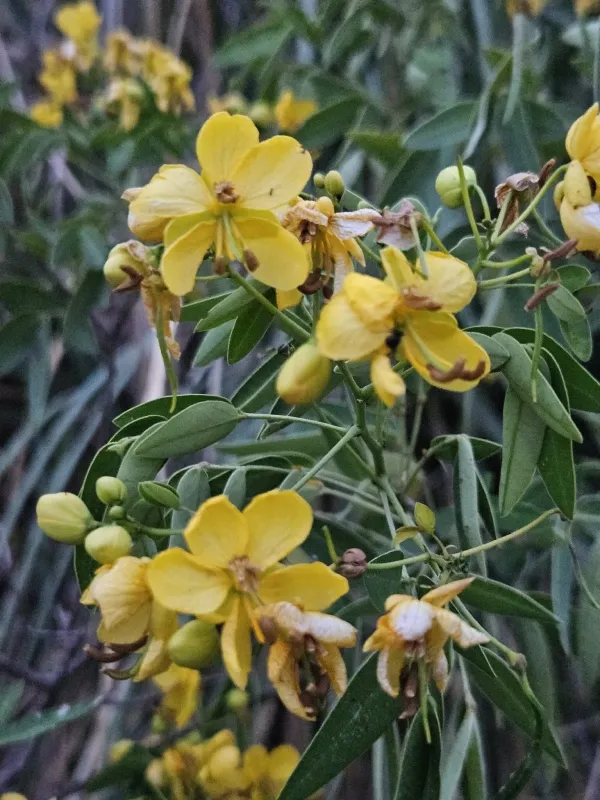
Description
Growing requirements
Senna corymbosa, commonly known as the flowery senna, is an evergreen shrub belonging to the Fabaceae family, prized for its vigorous growth and bright yellow, clustered flowers.
Originating from South America, specifically regions like Argentina and Uruguay, this plant thrives in warm, subtropical climates where it can receive full sun exposure throughout the day.
The cultural requirements demand well-draining, nutrient-rich soil that mimics the plant's natural habitat, as poor drainage is a primary cause of root failure in this species.
Proper agronomic management involves regular fertilization during the active growing season to support the development of its characteristic pinnate leaves and dense floral display.
In cooler temperate zones, the plant is typically grown in containers, allowing for it to be moved into protected environments during the frost-prone winter months to maintain longevity.
Main diseases and pests
The plant is susceptible to common greenhouse and garden pests, including spider mites, whiteflies, and scale insects, which thrive in stagnant, warm air conditions.
Fungal diseases, such as leaf spot and various root rots, can occur if the plant is subjected to waterlogged soil or overhead watering that keeps the foliage consistently wet.
Effective pest control strategies include monitoring for early infestations and applying horticultural soaps or systemic insecticides when necessary to prevent severe damage.
Maintaining high hygiene standards by removing dead or decaying organic matter from the base of the plant significantly reduces the risk of soil-borne pathogens.
Pruning is not only essential for shaping the shrub but also for improving airflow throughout the canopy, which naturally suppresses the development of fungal spores and pest colonies.