
Senna occidentalis
Senna occidentalis (L.) Link
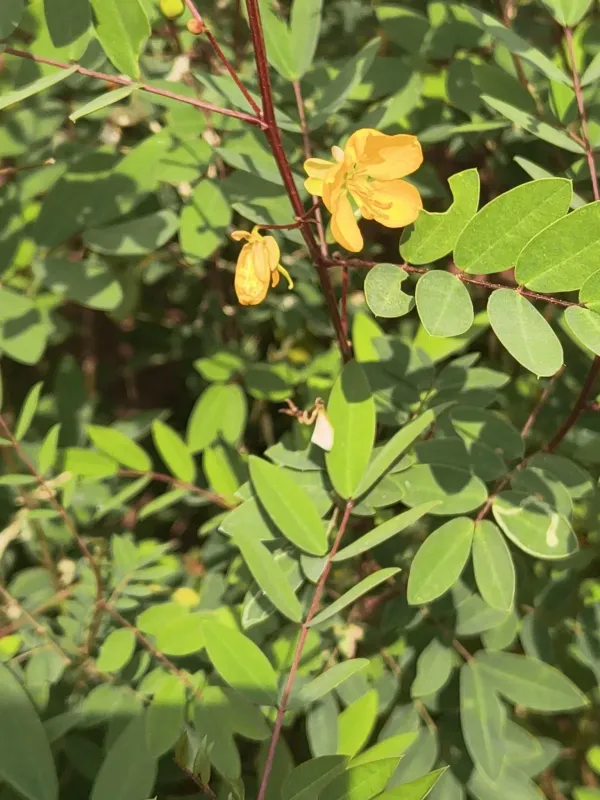
Description
Sowing dates
Sowing of Senna occidentalis typically occurs in the spring, once soil temperatures consistently stay above 18 degrees Celsius. Providing warm conditions is essential for successful germination and early establishment.
Seed treatment, such as mechanical scarification, is highly recommended to overcome seed coat dormancy. This practice ensures more uniform germination across the field, which is critical for consistent crop management.
Seeds should be sown at a depth of approximately 2 to 3 centimeters. The soil must be well-prepared, friable, and adequately moist to support the emerging radicle and shoot development.
Standard row spacing varies between 40 and 60 centimeters, allowing sufficient space for individual plants to branch out effectively and ensuring proper airflow between rows to prevent moisture buildup.
Regular weeding after seedling emergence is necessary. Young plants are sensitive to competition from aggressive weeds, which can significantly stunt growth during the critical first few weeks of life.
Growing requirements
As a member of the Fabaceae family, Senna occidentalis is a tropical plant that thrives in warm, sunny environments. It is extremely sensitive to cold and does not tolerate frost conditions.
The plant grows best in well-drained, fertile sandy or loamy soils. While it exhibits some tolerance to low-fertility soils, optimal yields are achieved in areas with a neutral pH balance and good soil structure.
Senna occidentalis is notably drought-resistant, making it a suitable candidate for areas with irregular rainfall patterns. However, consistent moisture during the flowering phase is beneficial for pod set.
Exposure to direct sunlight is non-negotiable for this species. Shade-grown plants often show significantly reduced biomass production and poor development of secondary metabolites, which are essential for its value.
Effective nitrogen fixation is a hallmark of this leguminous crop. However, supplemental fertilization with potassium and phosphorus often helps in promoting stronger stems and higher seed yields.
Yield
The plant is cultivated primarily for its seeds and foliage, which are harvested for medicinal, cosmetic, and sometimes agricultural uses. The economic value is determined by the concentration of specific active compounds.
Harvesting for biomass should occur during peak vegetative growth, just before the plant shifts its energy entirely towards reproduction. This ensures high quality and concentration of beneficial substances.
Seed harvesting is conducted once the pods have turned brown and reached maturity. Mechanized threshing is common, though adjustments must be made to minimize seed damage due to the brittle nature of the pods.
Post-harvest management is vital. Drying should be performed in a cool, well-ventilated environment to prevent fungal growth, which can quickly degrade the quality of the raw material.
Proper storage is essential to maintain product shelf-life. Keeping the material in moisture-proof containers in a cool environment protects against oxidation and pest infestations during transport and storage.
Main diseases and pests
Pathogenic fungi, especially those causing root rot or foliar spots, are the primary disease threats. These thrive in conditions of high humidity or poor soil drainage, necessitating careful management.
Common insect pests include aphids, mites, and various lepidopteran larvae that target leaves and pods. If left unchecked, these can severely limit the photosynthetic potential of the crop.
Integrated Pest Management (IPM) strategies are highly recommended. This includes crop rotation with non-leguminous plants and the use of resistant varieties where available to minimize chemical dependence.
Scouting the fields regularly for early signs of pest pressure allows for targeted interventions. Focusing on preventive measures significantly lowers the need for broad-spectrum insecticides.
Maintaining a balanced ecosystem around the fields, including buffer zones and beneficial insect habitats, can help regulate pest populations naturally and support more sustainable farming practices.