
Popcorn tree
Senna spectabilis (DC.) H. S. Irwin & Barneby var. excelsa (Schrad.) H. S. Irwin & Barneby
Description
Growing requirements
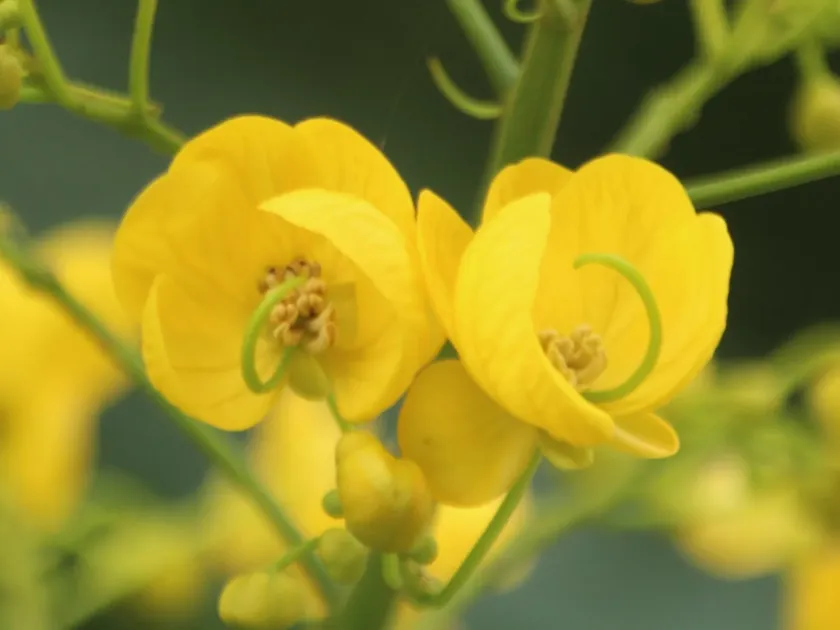
Senna spectabilis var. excelsa, commonly known as the popcorn tree, is a notable species within the Fabaceae family. This fast-growing tree is widely recognized for its spectacular yellow inflorescences that provide high ornamental value in tropical landscapes.
Originating from Central and South America, the species thrives in tropical climates characterized by high solar radiation. It is widely cultivated in regions where it can utilize full sun exposure to maintain its vigorous growth rate and overall health.
Regarding soil requirements, the plant prefers well-drained, nutrient-rich substrates. It exhibits a high degree of adaptability to various soil types, provided that waterlogging is avoided, as the root system is sensitive to prolonged anaerobic conditions.
The agronomic management involves regular maintenance pruning to strengthen the structure of the branches. Since the tree grows rapidly, monitoring for structural integrity is necessary, especially in areas prone to high winds or storm conditions.
Economic utility of this crop spans from urban reforestation and landscaping to potential pharmaceutical applications. The bark and leaves contain compounds that are frequently studied for their biological activity, positioning the plant as a versatile botanical resource.
Main diseases and pests
The main phytosanitary threats to Senna spectabilis include fungal leaf spots and root rots, particularly in environments with poor air circulation. Implementing proper planting distances is essential to mitigate the spread of these pathogens.
Pests such as aphids and certain lepidopteran larvae may cause damage during the growing season. Integrated pest management strategies, focusing on biological controls, are highly recommended to ensure the long-term health of the plantation.