
Senegal acacia
Senegalia senegal
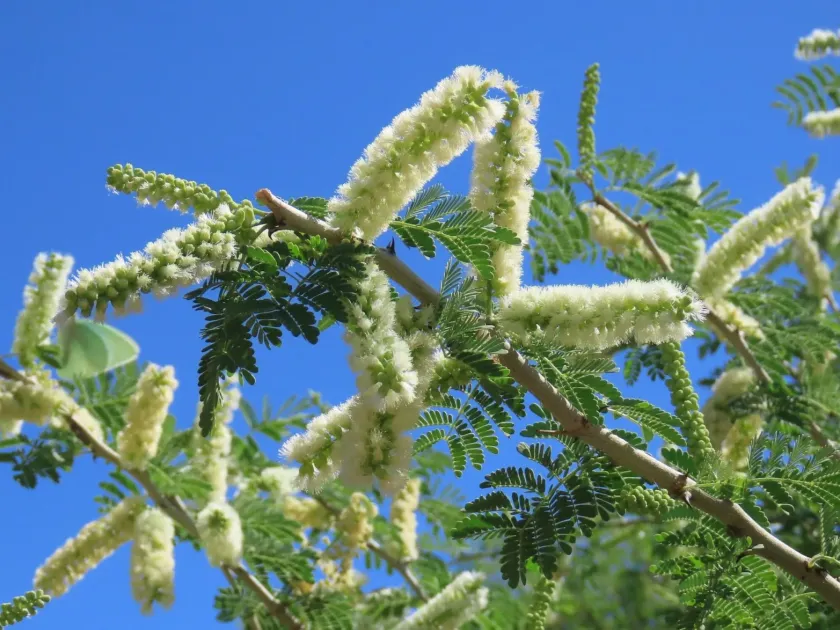
Description
Growing requirements
Senegal acacia (Senegalia senegal) is a member of the Fabaceae family. It is best known globally as the primary source of gum arabic, a natural exudate used extensively in food and pharmaceutical industries.
This species is native to the arid regions of sub-Saharan Africa, extending into parts of the Arabian Peninsula and the Indian subcontinent. It is highly adapted to environments with intense heat and scarce rainfall.
The tree thrives in well-drained sandy or rocky soils. It cannot tolerate waterlogging, as the root system is susceptible to decay if the soil remains saturated for extended periods, making site selection critical.
The climate requirements for Senegalia senegal involve high solar radiation and a long dry season. It is considered an excellent species for land restoration and soil nitrogen fixation in degraded areas.
Agroforestry practices involve intercropping with legumes or grasses during the initial years of development. Proper management of the tree canopy is essential to optimize both wood growth and the production of gum.
Main diseases and pests
One of the primary biological threats includes fungal pathogens, particularly root rot, which typically occurs when environmental conditions fluctuate or when the soil moisture is poorly managed.
Insects like wood-boring beetles and various locust species can cause significant damage to the foliage and structural integrity of the trees. Regular surveillance is necessary to control infestations.
Termite attacks represent a constant risk in the tropical regions where this tree is cultivated. Protecting young trees with natural barriers or localized treatments is a common practice for farm managers.
Browsing by domestic livestock such as goats and camels is a major threat to juvenile trees. Protective fencing is frequently required until the trees have developed sufficiently thick bark.
Disease management relies on preventive hygiene, such as removing dead branches and ensuring appropriate spacing to maintain airflow, which reduces the risk of spreading fungal infections among the trees.
Harvesting
The commercial harvest of gum arabic is a traditional process involving the tapping of the tree trunks. The most productive trees are typically harvested after 5 to 7 years of growth.
Tapping involves removing a small strip of bark to stimulate the release of gum. This process is synchronized with the dry season, as the tree's natural response to moisture loss is to produce the exudate.
The gum hardens upon contact with the air. Harvesters collect the dried nodules by hand, ensuring that no debris from the bark or soil is included in the final harvest to maintain high purity levels.
Yields are highly dependent on the tree health and the tapping technique. Skilled workers can increase yields by applying specific patterns of shallow incisions without causing permanent trauma to the tree.
Post-harvest processing includes cleaning and grading the gum arabic based on its color, viscosity, and solubility. It is then packed for transport, with high-quality gum being essential for food applications.