
Senegalia ataxacantha
Senegalia ataxacantha
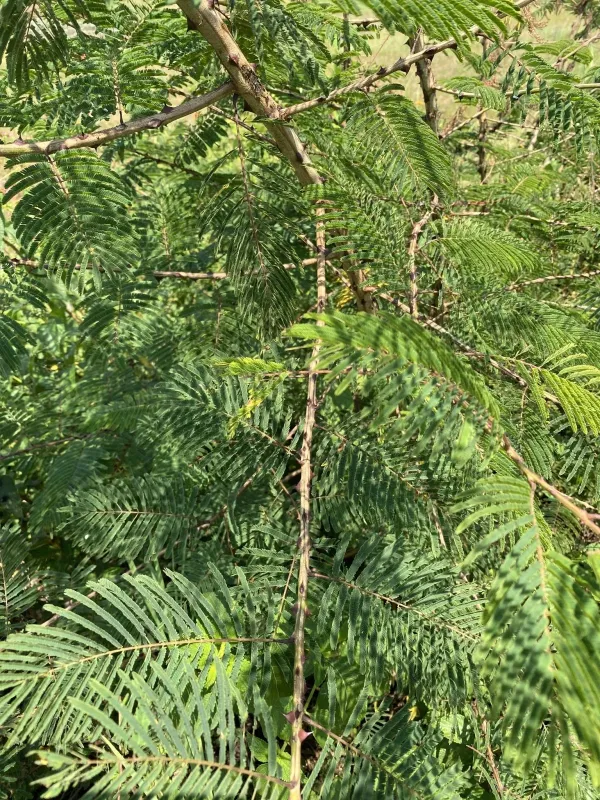
Description
Growing requirements
Senegalia ataxacantha, commonly known as the flame thorn, belongs to the Fabaceae family and is a prominent woody species native to the African continent. This perennial plant exhibits a versatile growth habit, ranging from a dense, thorny shrub to a scrambling climber that can reach considerable heights when supported by surrounding vegetation.
The crop is highly adapted to tropical and subtropical climates and thrives in well-drained soils, including those of low fertility. Its ability to fix nitrogen through a symbiotic relationship with soil bacteria makes it a valuable asset for soil restoration and sustainable agricultural practices, particularly in arid and semi-arid regions.
Agricultural management of Senegalia ataxacantha focuses on its high drought tolerance and light requirements. The plant demands full exposure to sunlight for optimal canopy development. When used for soil conservation or windbreaks, it is recommended to plant in open areas to allow for its natural, vigorous spreading habit.
Botanically, the species is characterized by its recurved thorns on the branches, which serve as a formidable defense mechanism. The bipinnate leaves are highly efficient at minimizing water loss, enabling the plant to maintain physiological activity even during prolonged dry seasons when other flora become dormant.
In terms of хозяйственное (economic) utility, Senegalia ataxacantha is primarily valued for constructing impenetrable living fences, providing fuel wood, and offering a reliable source of high-protein forage for browsing livestock. It also supports local biodiversity by providing essential nesting habitats and shelter for various avian species.
Main diseases and pests
The primary agronomic threats to Senegalia ataxacantha involve root pathogens, particularly those triggered by waterlogged soils. Excessive humidity and poor drainage create an environment conducive to fungal proliferation, which can cause significant root rot, especially in younger, developing specimens.
Pest pressure is frequently observed from wood-boring larvae that target the stems and branches of mature plants. These insects damage the cambium layer and vascular tissues, which can lead to structural weakness and increased susceptibility to secondary infections by opportunist bacteria or viruses.
Sucking insects, such as aphids and scale insects, often infest the new growth during the start of the rainy season. By feeding on the sap, these pests severely retard the development of foliage, which can lead to stunted growth and reduced overall biomass production for the season.
Fungal diseases like powdery mildew are common in dense plantations with inadequate air circulation. This infection manifests as a powdery white coating on the leaflets, significantly reducing the plant's photosynthetic capacity and hindering its potential growth rate during the peak season.
Effective management strategies should prioritize careful site selection with good drainage, maintaining proper spacing to prevent overcrowding, and implementing early detection monitoring to control pest populations before they cause irreversible damage to the plantation.