
Senegalia catechu
Senegalia catechu
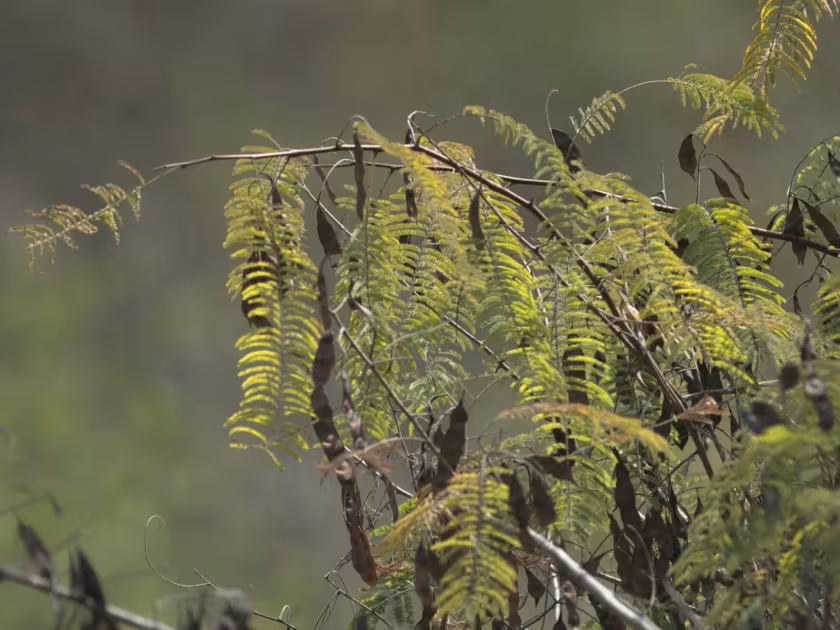
Description
Sowing dates
Senegalia catechu seeds possess a hard seed coat, necessitating scarification or soaking in hot water prior to sowing to improve germination rates. Planting is best timed at the onset of the rainy season to ensure sufficient moisture for seedling establishment.
In nurseries, seeds are sown in containers or prepared beds with a light, well-draining substrate. Planting depth should be maintained at roughly 1 to 2 centimeters to ensure successful sprout emergence.
Transplanting to the permanent field site should occur when seedlings reach 30–50 centimeters in height. Care must be taken to maintain the root ball integrity, as the taproot is essential for the tree's future resilience.
Planting density varies based on the intended end-product, whether for timber or extract production, ranging from 1,000 to 2,500 trees per hectare to optimize biomass yield.
Regular irrigation is vital during the first two years of growth until the tree develops a deep root system capable of accessing subsurface moisture independently.
Growing requirements
As a member of the Fabaceae family, Senegalia catechu is a heat-loving plant adapted to tropical and subtropical climates. It exhibits remarkable drought tolerance, making it an ideal crop for regions facing severe water shortages.
The tree thrives in well-drained sandy, loamy, or stony soils. It is highly sensitive to waterlogging, thus ensuring the site has excellent drainage is a critical requirement for successful cultivation.
Maximum solar exposure is necessary for healthy development. Shading significantly hampers growth rates and reduces the concentration of beneficial tannins and catechins in the heartwood.
The optimal temperature range for growth is between 20 and 35 degrees Celsius. While it can withstand minor temperature fluctuations, extended frosts can be lethal, particularly to younger trees.
Senegalia catechu forms symbiotic relationships with nitrogen-fixing bacteria, allowing it to flourish in nutrient-poor soils and actively participate in land restoration and soil fertility improvement.
Yield
The primary economic value of the tree lies in the production of cutch, an extract derived from the heartwood of mature trees. This extract is highly prized for its pharmaceutical, tanning, and food additive properties.
Harvesting for commercial extract production generally begins 15 to 20 years after planting, once the trunks have reached sufficient diameter to contain high concentrations of tannins.
Yield efficiency is dictated by tree maturity, soil conditions, and site-specific management. Besides the extract, the heartwood itself is a valuable timber source, known for its exceptional hardness and durability.
Additionally, the tree provides a gum similar to gum arabic, offering farmers an alternative revenue stream and improving the overall financial viability of the agroforestry system.
Sustainable yield management requires long-term planning and a strategic replanting schedule to ensure consistent supply and profitability over several decades.
Main diseases and pests
Senegalia catechu is susceptible to various fungal pathogens, particularly root rot, which typically thrives in poorly drained or waterlogged environments. Preventive drainage is the most effective management strategy.
Insect pests, including wood borers and foliage feeders, can cause damage if outbreaks are not monitored. Regular field inspections are essential to detect infestations before they impact significant portions of the plantation.
Effective protection includes removing infected or dead specimens to prevent the spread of diseases and pests throughout the stand, alongside using locally adapted seed sources.
Young plants are particularly vulnerable to grazing by livestock or wild animals. Installing fences around new plantations is a standard and necessary agricultural practice during the initial growth years.
An integrated pest management approach, utilizing minimal chemical intervention and robust silvicultural practices, provides the most reliable protection for the trees.
Harvesting
Harvesting involves the planned felling of mature trees. The bark and sapwood are removed, as only the dense, dark-colored heartwood contains the high levels of extractable compounds required for high-quality cutch.
Post-harvest processing often takes place on-site to minimize transport costs. The heartwood is chipped and boiled in water, with the resulting extract concentrated through evaporation into solid blocks.
Skilled labor is required to ensure that the valuable heartwood is correctly separated from waste materials, which directly impacts the purity and marketability of the final product.
Post-felling, the plantation site must be prepared for replanting to maintain production cycles. This ensures the continuous rejuvenation of the crop and long-term land productivity.
Efficiency in harvesting is heavily dependent on logistical planning and the availability of on-site processing equipment to streamline the conversion of raw wood into marketable extract.