
Senegalia caffra
Senegalia caffra
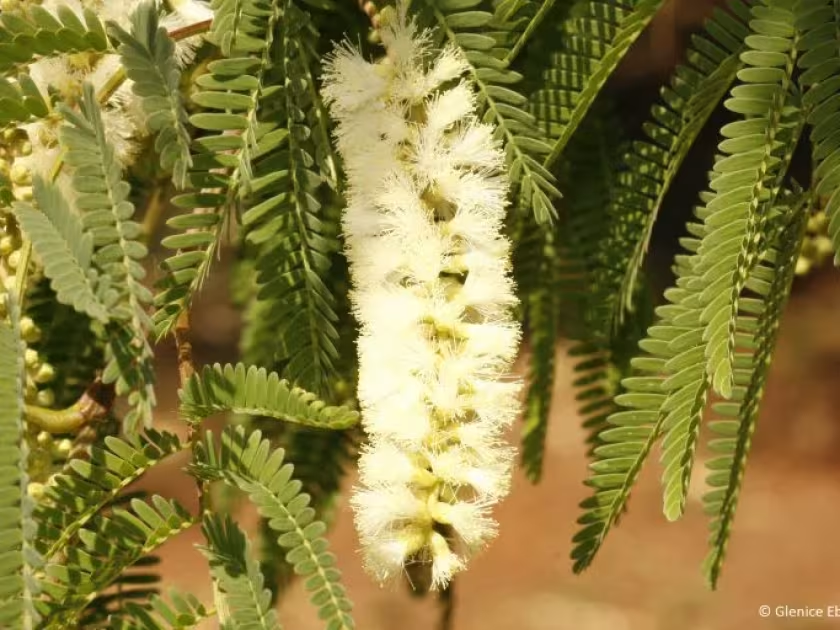
Description
Growing requirements
Senegalia caffra, commonly known as the common hook thorn, is a prominent member of the Fabaceae family. It is native to the southern regions of Africa, where it thrives in diverse habitats, ranging from wooded grasslands to rocky slopes.
Regarding soil requirements, the tree is remarkably adaptable. It prefers deep, well-drained soils but can effectively colonize nutrient-poor or rocky sites. This versatility makes it an excellent choice for erosion control and landscape restoration projects.
The climate requirements for this species are centered around warm, frost-free or mild-frost conditions. It is highly drought-tolerant, utilizing a deep root system to access groundwater, which allows it to remain productive in semi-arid environments.
Agricultural management is relatively low-input once the tree is established. Pruning may be conducted in early stages to encourage structural integrity, while nitrogen-fixing capabilities contribute to the enrichment of the surrounding topsoil.
The primary economic uses of Senegalia caffra include high-quality timber production, fodder provision for livestock during dry seasons, and its role as a honey plant, supporting local apiculture and biodiversity.
Main diseases and pests
The health of Senegalia caffra is primarily challenged by seed-feeding insects, specifically bruchid beetles, which lay eggs in the pods. This infestation can significantly compromise the viability of seeds for future planting.
Leaf-eating caterpillars and aphids are secondary threats that can cause extensive defoliation, especially in younger specimens. These pests weaken the plant and make it susceptible to opportunistic pathogens.
Fungal diseases are more prevalent in nursery settings where airflow is restricted and humidity is high. These pathogens may cause damping-off in seedlings or necrotic leaf spots in mature trees.
Effective management requires a combination of strict nursery sanitation, proper site selection to ensure good airflow, and the monitoring of pest populations before they reach economic thresholds.
When necessary, localized applications of bio-pesticides or physical removal of infested plant parts are recommended to maintain tree vigor without disrupting the surrounding ecosystem.