
Senegalia berlandieri
Senegalia berlandieri
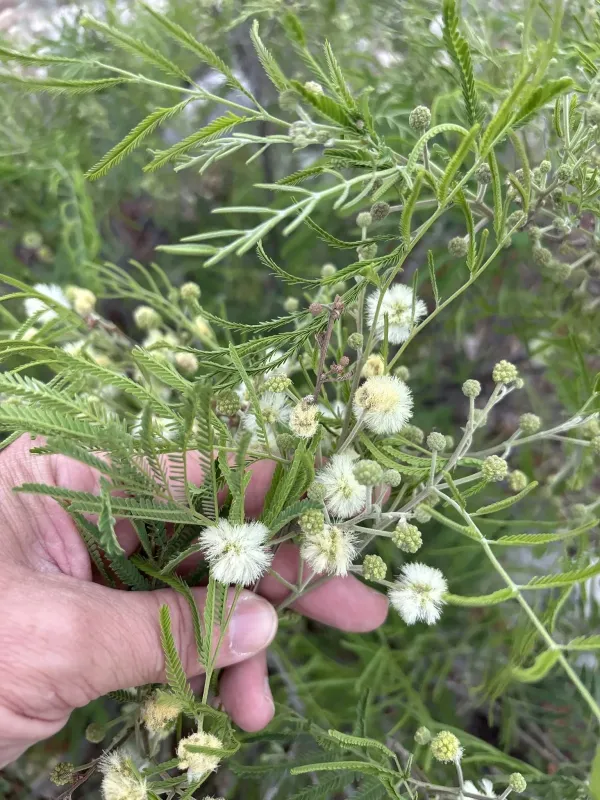
Description
Growing requirements
Senegalia berlandieri, formerly known as Acacia berlandieri, is a perennial shrub belonging to the Fabaceae family. This species is highly adapted to arid and semi-arid environments, making it a critical subject for research in sustainable agriculture in dry climates.
The native distribution of this plant includes the southern regions of Texas and the northern states of Mexico. It is frequently found in rocky, limestone-rich soils where it forms extensive shrublands, demonstrating its capability to thrive in harsh, nutrient-poor landscapes.
This crop requires well-drained soil conditions and thrives in neutral to alkaline pH environments. Its nitrogen-fixing capabilities, facilitated by a symbiotic relationship with bacteria, allow it to maintain growth even when soil fertility is significantly low.
Regarding climate, Senegalia berlandieri requires high solar radiation and thrives in temperatures ranging from warm to hot. It is intolerant of prolonged freezing temperatures, which necessitates selecting frost-free zones for successful cultivation.
Proper field establishment requires full sun exposure. The plant exhibits poor competitive ability under shaded conditions, so clear land management strategies are essential to ensure that saplings and mature shrubs receive sufficient light for biomass accumulation.
Yield
The primary agricultural use of Senegalia berlandieri is as a high-protein forage source for livestock, particularly in areas where water scarcity prevents the growth of traditional grasses. It provides essential nutrition during periods of drought.
Beyond its forage value, the shrub is recognized as an excellent honey plant. During the spring bloom, the flowers produce high volumes of nectar, contributing significantly to the honey production industry in the regions where it is grown.
The shrub is also utilized for land reclamation and erosion control. Its robust root architecture makes it effective in stabilizing slopes, preventing soil degradation in susceptible dryland farming areas.
Yield management involves systematic pruning to encourage dense lateral growth and increase the total harvestable biomass. Efficient harvesting techniques can be applied to maximize the economic output from naturally occurring or cultivated stands.
While the foliage is nutrient-dense, its chemical profile requires that it be incorporated into animal feed as part of a balanced diet. Proper management of feed ratios ensures both animal health and optimal productivity of the livestock operations.
Main diseases and pests
Senegalia berlandieri is remarkably resilient to most agricultural diseases. However, monitoring for insect pests, particularly those that target legumes, is recommended. Certain weevils may infest the seed pods, which can impact the regeneration of the stands.
Root rot caused by excessive soil moisture remains the most significant threat to plant health. Ensuring that cultivation sites have excellent drainage is the most effective cultural practice to mitigate the risk of fungal infections.
Mechanical damage to the stems and bark can open entry points for opportunistic pathogens. Regular field maintenance, including the removal of debris and the prevention of mechanical injury during field operations, is highly advised.
Viral or bacterial diseases are infrequent in managed stands under proper conditions. Most issues arise from sub-optimal site selection, such as planting in low-lying areas where water tends to accumulate after heavy rainfall.
Overall, the plant requires very low levels of chemical pesticide intervention. Its natural evolutionary adaptation to harsh environments provides it with a substantial inherent defense system against most common agricultural pests.