
Senegalia robynsiana
Senegalia robynsiana
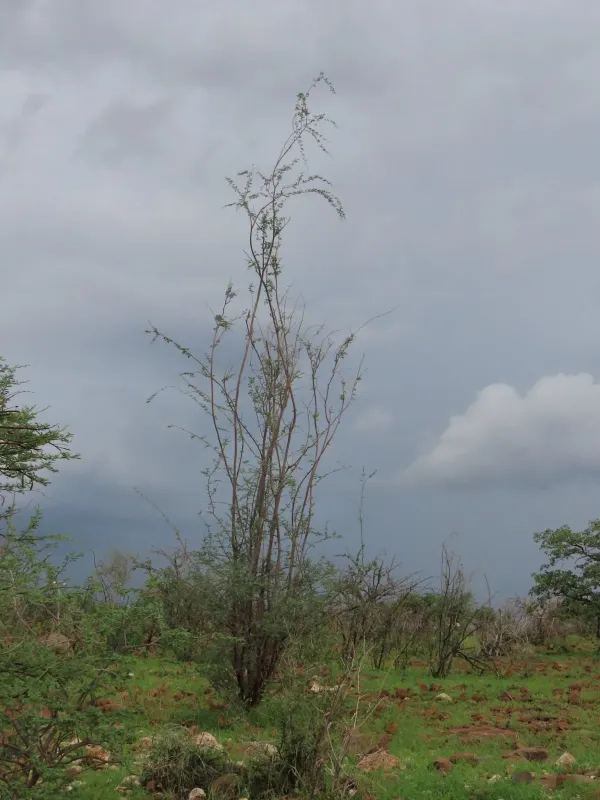
Description
Growing requirements
Senegalia robynsiana is a member of the Fabaceae family, widely recognized for its adaptation to the arid environments of southern Africa. It acts as a resilient tree species in harsh landscapes.
The native distribution covers specific arid regions, primarily in Namibia. It is biologically adapted to extreme heat and poor soil quality, often found in rocky terrains.
Regarding soil requirements, the species performs best in well-drained, sandy, or gravelly soils. It does not tolerate waterlogging, which is a critical factor in site selection.
The plant demonstrates a remarkable drought-tolerance mechanism by developing a deep taproot, allowing it to access subterranean water reserves inaccessible to many other crops.
Climatic requirements focus on high solar radiation and stable high temperatures. The species is sensitive to frost and thrives in regions with low relative humidity throughout the year.
Yield
The species serves as a critical fodder resource. Livestock, particularly goats and cattle, graze on its leaves and shoots, which remain nutritious even during dry spells.
Beyond fodder, the wood is highly valued for its density and durability. It is traditionally used in rural construction and for creating resistant enclosures for livestock.
As a nitrogen-fixing legume, it significantly contributes to soil fertility management in arid regions, making it a valuable component for sustainable land rehabilitation.
Yield management involves structured pruning techniques. By carefully trimming the canopy, farmers can maximize the output of fresh forage during the most critical seasons.
The seeds may also provide a supplementary protein source for local agriculture, provided they undergo proper preparation to remove anti-nutritional factors common in legumes.
Main diseases and pests
Insect pests, including various beetle larvae and leaf-feeding caterpillars, represent the primary threat to the biomass production of this tree species.
Fungal infections, typically linked to poor site drainage or excessively moist microclimates, can lead to root degradation and stunted growth in nursery saplings.
Overgrazing by domestic animals is a significant threat, especially during the establishment phase, as young trees are highly vulnerable to physical damage.
Parasitic plants, such as specific mistletoe species, are known to colonize the branches of mature trees, drawing nutrients and weakening the overall vigor of the host.
Effective management requires integrated pest control measures to minimize losses, combined with proper fencing to protect the young trees during their early developmental stages.