
Senegalia pennata
Senegalia pennata
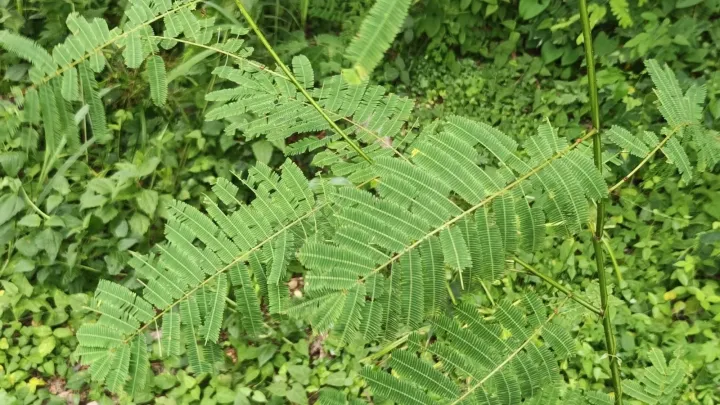
Description
Growing requirements
Senegalia pennata, commonly known as climbing wattle, is a perennial climbing shrub belonging to the Fabaceae family. Native to tropical regions of South and Southeast Asia, it thrives in diverse environments ranging from lowland forests to more open, sunny scrublands.
This species requires a tropical climate with high temperatures and significant seasonal rainfall. While adaptable to various soil types, it performs best in well-drained, nutrient-rich soils where it can establish a deep and robust root system capable of supporting its rapid vining growth.
The plant is characterized by its bipinnate leaves and sharp, curved thorns that allow it to scramble over other vegetation. Small, creamy-white or yellow flowers are produced in dense heads, which later develop into flat, pod-like fruits containing the seeds.
Cultivation practices involve managing the plant's aggressive growth habit through regular pruning if grown in managed landscapes. In agroforestry systems, it is often utilized for nitrogen fixation, which naturally improves soil health and supports adjacent crops in a sustainable manner.
The economic utility of Senegalia pennata is substantial, as the tender young shoots and leaves are a popular vegetable in various Southeast Asian cuisines. Furthermore, different parts of the plant are traditionally harvested for their therapeutic properties in herbal medicine.
Main diseases and pests
The plant is generally hardy, but it can be susceptible to fungal diseases such as leaf spot if air circulation is poor. Common pests include sap-sucking insects like aphids and mealybugs, which can stunt the growth of young, succulent foliage during dry periods.