
Senegalia laeta
Senegalia laeta
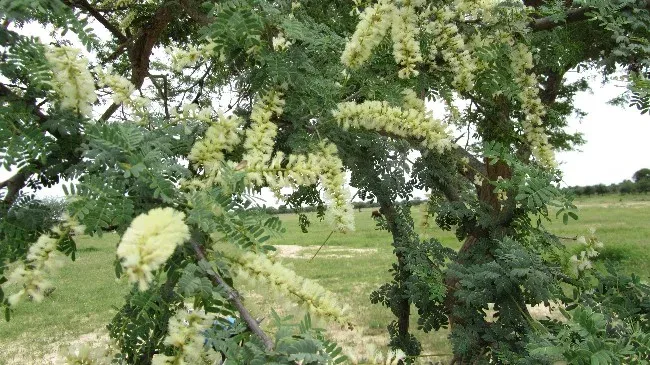
Description
Growing requirements
Senegalia laeta is a perennial woody plant belonging to the Fabaceae (legume) family. Historically classified under the genus Acacia, it is a sturdy, drought-resistant tree adapted to the harsh environmental conditions of the African savanna and arid zones.
This species is native to regions spanning from Senegal to Ethiopia and Sudan. It is specifically evolved to survive in environments characterized by extreme heat and erratic rainfall, making it a critical component of semi-arid ecosystems.
Botanically, it appears as a small tree or shrub, typically reaching 5 to 6 meters in height. The foliage consists of compound, bipinnate leaves that fold during the hottest parts of the day to reduce transpiration. The plant is armed with small, paired, hooked thorns along its branches.
Regarding soil requirements, Senegalia laeta thrives in sandy, rocky, or well-drained loamy soils. It has an excellent ability to fix atmospheric nitrogen through a symbiotic relationship with soil bacteria, allowing it to grow in nutrient-poor substrates where other crops might fail.
The climate requirement is strictly tropical to subtropical, with a need for high light intensity and distinct dry seasons. It is highly intolerant of waterlogging, which can cause root asphyxiation, and requires excellent drainage to remain healthy throughout the year.
Main diseases and pests
The most significant threats to the health of Senegalia laeta include various wood-boring beetle species. These pests can compromise the integrity of the trunk and reduce the tree's ability to produce gum or transport water.
Fungal infections, particularly root rot, pose a major risk if the tree is planted in heavy, clay-rich soils that retain moisture. Proper site selection and avoiding irrigation over-saturation are the primary preventative measures.
Parasitic plants, such as mistletoe, often colonize the canopy, siphoning nutrients and water from the host tree. Manual removal during regular maintenance cycles is essential for maintaining a healthy plantation.
Climate change and unsustainable grazing pressure threaten wild populations. Over-browsing by livestock can prevent saplings from reaching maturity, leading to a decline in natural regeneration rates in many areas.
- Regular monitoring for beetle entry holes in the bark.
- Avoidance of waterlogged or poorly drained soil types.
- Manual pruning to remove parasitic infestations.
- Installation of temporary fencing to protect young plants from livestock.
Harvesting
The primary economic value of Senegalia laeta is the production of high-quality gum arabic. This natural exudate is harvested from the bark of the tree, usually induced by physical incisions or stress, such as severe heat or drought conditions.
Harvesting takes place during the dry season, when the sap is most concentrated. The gum hardens into nodules, which are collected manually. This product is highly valued globally in the food, beverage, and pharmaceutical industries as a thickening agent and stabilizer.
The wood of this tree is remarkably dense and durable. It is traditionally utilized in rural areas for tool handles, fencing, and as high-quality charcoal. Its resistance to decay makes it a preferred material for construction in humid or insect-prone tropical environments.
In addition to industrial products, the plant provides essential ecosystem services. Its leaves and pods are a vital source of protein-rich forage for goats, camels, and other livestock, especially during the peak of the dry season when ground vegetation disappears.
Agricultural management focuses on sustainable tapping practices to ensure the tree remains productive for decades. Over-tapping can weaken the plant, so local guidelines emphasize resting periods for the trees between harvesting cycles.