
Senegalia hereroensis
Senegalia hereroensis
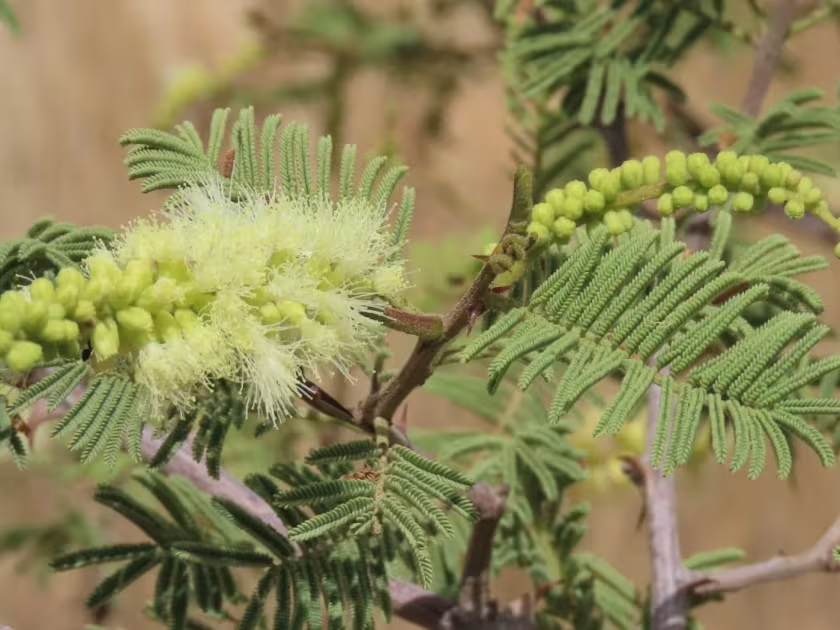
Description
Growing requirements
Senegalia hereroensis is a resilient member of the Fabaceae family, native to the arid and semi-arid regions of Southern Africa. It typically grows as a multi-stemmed shrub or a small tree, exhibiting high survival rates in harsh environments.
The plant thrives in well-drained soils, showing a preference for rocky or sandy terrain. It is exceptionally well-adapted to high temperatures and long drought periods, utilizing an extensive root system to access deep water reservoirs.
Growth conditions require full sun exposure, as the plant does not tolerate shading. In agricultural settings, it is valued for its hardiness and ability to perform well in poor, nutrient-deficient soils where typical crops would fail.
It acts as a nitrogen-fixing plant, which can naturally improve soil quality in areas where it is cultivated. This biological feature is highly beneficial for sustainable land management in tropical environments.
Economically, the species is utilized for livestock fodder, fuel wood production, and soil stabilization in desert-prone regions. It serves as an essential ecological bridge in its native savanna habitats.
Main diseases and pests
Root rot is the primary physiological threat to Senegalia hereroensis, often caused by waterlogging or poor drainage. Proper site selection is vital to ensure long-term plant health and vigor.
Various insect pests, such as aphids and spider mites, can damage tender foliage, especially during transitions between dry and wet seasons. Timely intervention is required to prevent widespread infestation.
Wood-boring beetles present a constant risk to mature trees, as they can weaken the main stem and structural integrity. Monitoring the bark for entrance holes is a critical maintenance practice.
Fungal infections in seedlings can occur if soil pathogens are present. Using treated seeds and maintaining proper spacing is essential to reduce the impact of these soil-borne diseases.
Epiphytic or parasitic plants, like mistletoe, can attach to branches and significantly drain nutrients from the host. Pruning affected branches is necessary to ensure the plant's continued survival.