
Catclaw acacia
Senegalia greggii
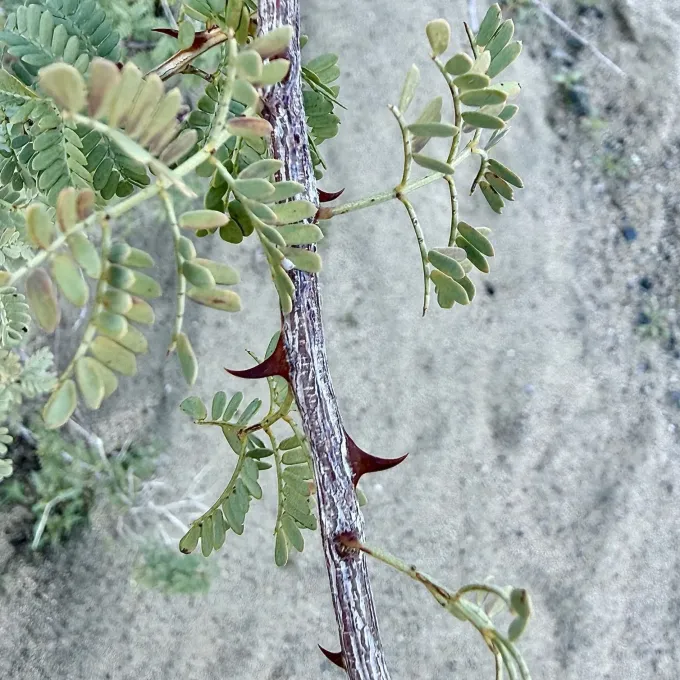
Description
Sowing dates
Propagation of Senegalia greggii is primarily achieved through seeds. Due to their hard seed coat, scarification is essential before sowing to ensure water absorption and initiate the germination process successfully.
The ideal time for planting is during the spring season when soil temperatures are consistently between 20 and 25 degrees Celsius. Ensuring proper thermal conditions is critical for achieving high germination rates.
Nursery propagation in containers is common to monitor root development and protect young seedlings from environmental stress. Once the root system is established, the plants are ready for field transplantation.
When seeding directly into the field, protection from local fauna is mandatory for young plants. Sufficient spacing, typically 3–4 meters, is required to accommodate the natural spread of the tree's canopy.
Seeds should be sown at a depth of 1–2 centimeters. Planting too deep can prevent the seedling from reaching the surface, while too shallow planting exposes the seed to drying out or predation.
Growing requirements
Catclaw acacia is a member of the Fabaceae family, highly adapted to the arid environments of the Southwestern United States and Northern Mexico. It is a true xerophyte, thriving where rainfall is scarce.
The plant requires full sun exposure for healthy growth and development. It performs best in well-drained, sandy, or gravelly soil types, as it cannot tolerate waterlogged conditions or standing water.
This species shows remarkable tolerance to alkaline and saline soils, making it an excellent candidate for land reclamation and controlling soil erosion in degraded arid ecosystems.
It can withstand a broad temperature range, including extreme heat. While hardy, established trees are generally resistant, severe prolonged frost may damage younger branches, necessitating careful site selection.
A key biological benefit is its symbiotic relationship with nitrogen-fixing bacteria. This allows the plant to improve soil nutrient profiles naturally, even in nutrient-poor desert substrates.
Yield
The economic value of Catclaw acacia is largely environmental and functional, contributing to biomass production and ecosystem restoration. It is vital for land stabilization in challenging climates.
The wood of this tree is renowned for its exceptional density and hardness. It is highly valued in woodworking for creating specialized furniture and artifacts, though the growth cycle is relatively slow.
The tree serves as a valuable nectar source for bees during its flowering period in late spring and early summer. The resulting honey is recognized for its unique, rich flavor profiles.
Its pods are a natural protein source for livestock and native wildlife. In agroforestry systems, these pods can be utilized as supplementary forage, provided they are managed correctly.
Productivity is measured by the plant's ability to maintain structural integrity and improve soil quality. Mature stands are highly sustainable, requiring minimal human intervention once established.
Main diseases and pests
Senegalia greggii possesses a strong natural resistance to most common agricultural pathogens. Disease issues are almost exclusively related to improper drainage and excessive soil moisture.
The most significant pests are seed-feeding insects, specifically bruchid beetles, which lay eggs in the developing pods. This can significantly reduce the viability of seed harvests.
Young plants are frequently targeted by rodents and browsers. Protecting young stands with wire mesh or tree guards is often necessary until the plant is sufficiently developed.
Fungal leaf spot diseases can occur under conditions of high humidity or poor air circulation. Maintaining proper density and pruning dead branches can help minimize these risks.
There are no major catastrophic pests that threaten mature forests of this species, highlighting its robustness as an indigenous plant in its natural range.
Harvesting
Harvesting pods should occur once they are fully dried on the branches and have turned a characteristic brown color. This typically takes place in late summer or early autumn.
Manual harvesting is the preferred method due to the tree's dense canopy and sharp thorns. Mechanical harvesting is largely impractical for this species due to its branching structure.
Collected pods must be dried thoroughly in a well-ventilated, shaded area to prevent fungal growth. Proper storage is crucial for maintaining seed vitality for future planting seasons.
When harvesting timber, trees are selectively logged at maturity. The wood requires slow kiln-drying to prevent splitting and checking due to its extremely high density.
All harvest-related activities require the use of heavy-duty protective clothing, as the thorns of the Catclaw acacia are known to be sharp and can cause significant injury.