
Senegalia fleckii
Senegalia fleckii
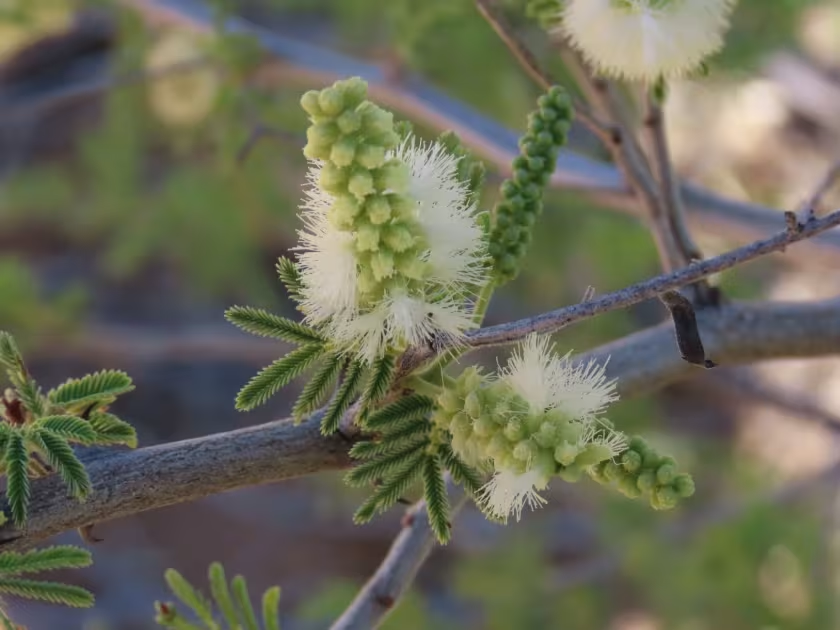
Description
Growing requirements
Senegalia fleckii is a shrub or tree species belonging to the Fabaceae family. It is native to the arid and semi-arid regions of Southern Africa, where it has evolved to thrive in harsh environments characterized by erratic rainfall and nutrient-poor soils.
Botanically, this species is known for its resilience and ability to endure extended dry seasons. Like many members of the Mimosoideae subfamily, it is capable of atmospheric nitrogen fixation, which significantly contributes to soil fertility in its natural habitat.
The cultivation requirements focus heavily on soil drainage. Senegalia fleckii demands light, well-aerated, sandy, or gravelly soils. It performs poorly in heavy, clay-rich substrates that tend to retain water for long periods, as excessive moisture often triggers root-related health issues.
In terms of climate, the species is perfectly adapted to high-temperature environments. It requires significant exposure to sunlight for optimal physiological activity. In agricultural settings, it is valued for its hardiness, though it is not frost-tolerant, limiting its cultivation to tropical and subtropical climate zones.
Agrotechnical management mainly involves ensuring proper establishment during the first growth stages. Once mature, the plant requires very little maintenance, making it a potentially sustainable choice for erosion control and agroforestry systems in extremely dry climates.