
Senegalia erubescens
Senegalia erubescens
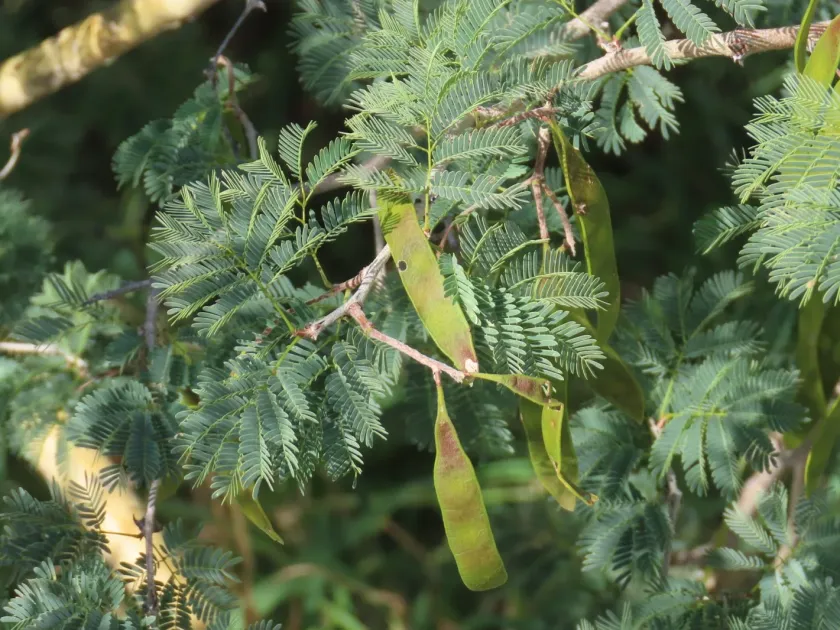
Description
Growing requirements
Senegalia erubescens, commonly known as the blue-thorn acacia, belongs to the Fabaceae family. It is a deciduous, drought-tolerant tree native to the arid and semi-arid regions of Southern Africa.
The species is well-adapted to hot and dry climates, often found in savanna environments. It thrives in well-drained, sandy or loamy soils and is known for its high tolerance to seasonal moisture stress.
Botanically, it features characteristic stipular spines and bipinnate leaves. It acts as a nitrogen-fixing species, which contributes significantly to soil fertility improvement in agroforestry systems.
Optimal cultivation requires full sun exposure and regions where temperatures remain consistently above freezing. It is a robust species that requires minimal intervention once established in appropriate environmental conditions.
Economically, the tree is utilized for high-quality firewood, timber for small-scale construction, and as a vital source of forage for livestock and game during the dry seasons.
Main diseases and pests
Seed-feeding beetles represent a primary threat to the natural regeneration of the species, significantly reducing the viability of harvested seeds for future planting.
Fungal infections, particularly wood-rotting pathogens, can establish in the tree following bark injury, potentially leading to the structural failure of the main trunk over time.
Parasitic plants such as mistletoe frequently infest the canopy of mature trees, drawing nutrients and water, which eventually stunts the growth and reduces the overall lifespan of the host.
Termites can cause significant damage to the roots and sapwood of younger specimens, requiring preventative measures in nurseries or newly established plantations.
Overgrazing by local fauna is a major risk, as both wild and domestic animals browse heavily on the young shoots, hindering the development of the tree canopy.