
Black bog-rush
Schoenus nigricans
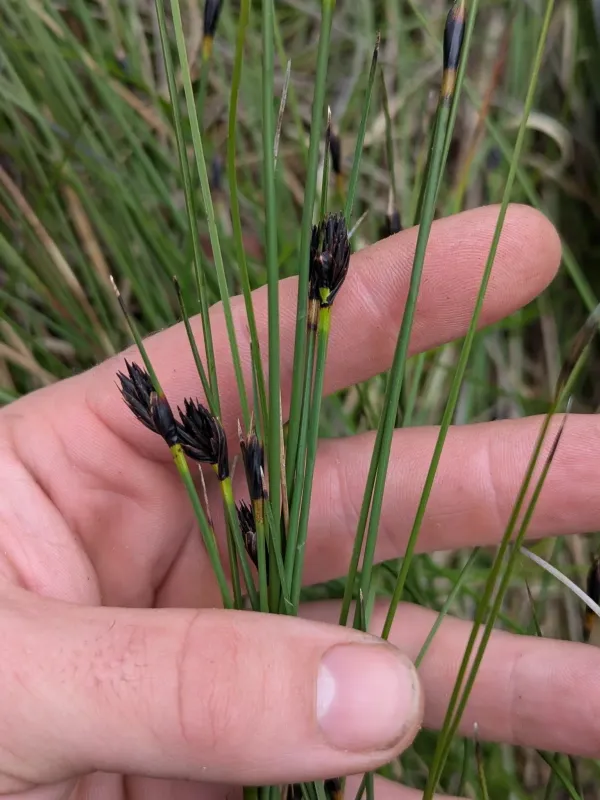
Description
Growing requirements
Schoenus nigricans, commonly known as black bog-rush, is a perennial herbaceous plant belonging to the Cyperaceae family. It is widely distributed across temperate and subtropical zones, typically found in fens, marshes, and damp meadows.
Botanically, the plant is characterized by its distinct dense tufts of stiff, wire-like, dark green leaves. The inflorescence consists of small, dark brown or nearly black spikelets arranged in clusters, providing a unique architectural look.
The cultivation requirements focus heavily on soil moisture levels. It thrives in waterlogged or high-moisture substrates and exhibits a remarkable tolerance for saline conditions, making it suitable for coastal landscaping projects.
In terms of soil, it prefers organic-rich, slightly acidic to neutral soils that retain moisture throughout the year. It does not tolerate prolonged drought, which often leads to the decline of the plant structure.
Beyond its ecological value, black bog-rush is increasingly used in sustainable landscaping to stabilize shorelines and provide habitat for biodiversity in created wetland systems.
Main diseases and pests
Habitat loss due to land drainage and wetland reclamation remains the primary threat to the natural populations of Schoenus nigricans. As a moisture-dependent plant, its existence is directly tied to the local water table.
Pathological risks include fungal infections caused by high humidity in stagnant air environments, which may lead to leaf spotting or crown rot. Proper spacing and airflow are crucial to mitigating these risks.
Pest pressures are generally low; however, during stress periods caused by fluctuating water levels, aphids or spider mites may exploit the plant, weakening its resilience against secondary infections.
Management strategies involve keeping the surrounding area free from invasive weeds that might outcompete the bog-rush for light and resources, especially during the establishment phase.
Integrated pest management in ornamental settings should prioritize physical removal of diseased biomass to ensure the plant continues to thrive without the need for harmful chemical interventions.