
Black-spiked bog-rush
Schoenus melanostachys
Description
Growing requirements
Black-spiked bog-rush (Schoenus melanostachys) is a perennial herbaceous plant belonging to the Cyperaceae family. It is typically found in wetland habitats, marshes, and damp meadows, where it plays an important role in the local ecosystem by forming dense, root-bound mats.
This culture is highly adapted to specific soil conditions, thriving in acidic, peat-based, or sandy substrates that retain high moisture levels. It is particularly well-suited for areas prone to waterlogging, making it an excellent candidate for landscape restoration and wetland stabilization projects.
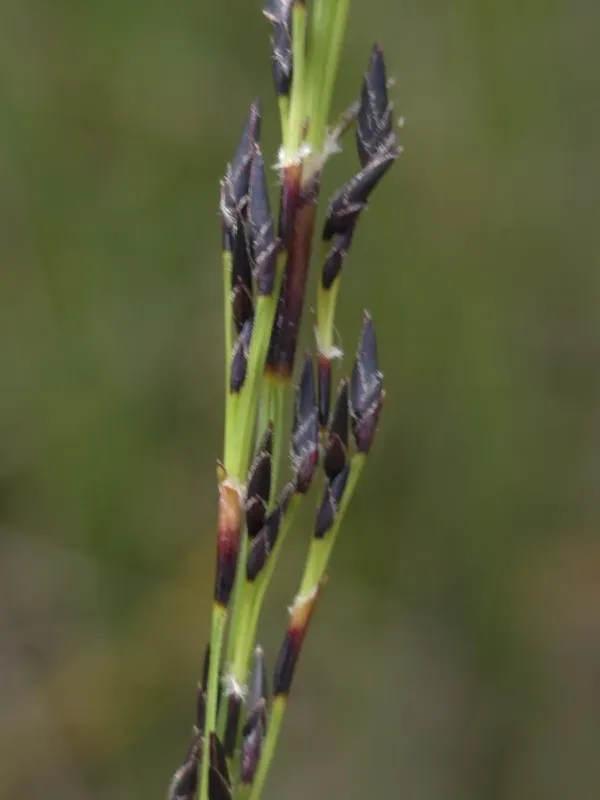
Botanically, the plant is characterized by its narrow, tough leaves and stiff, erect stems. The inflorescences are distinct, appearing as dark, nearly black spikelets, which provide the primary diagnostic feature for identifying the species within its natural range.
Regarding climatic requirements, the plant prefers temperate zones where humidity remains consistent. While it shows reasonable tolerance to cold, maintaining soil moisture during the active growing season is essential for its long-term survival and vigor in non-natural garden settings.
The economic and ecological utility of Schoenus melanostachys is primarily focused on phytoremediation. It acts as an effective soil binder in erosion-prone areas and serves as a natural filter for water purification systems, contributing significantly to the health of aquatic and semi-aquatic habitats.