
Schoenus apogon
Schoenus apogon
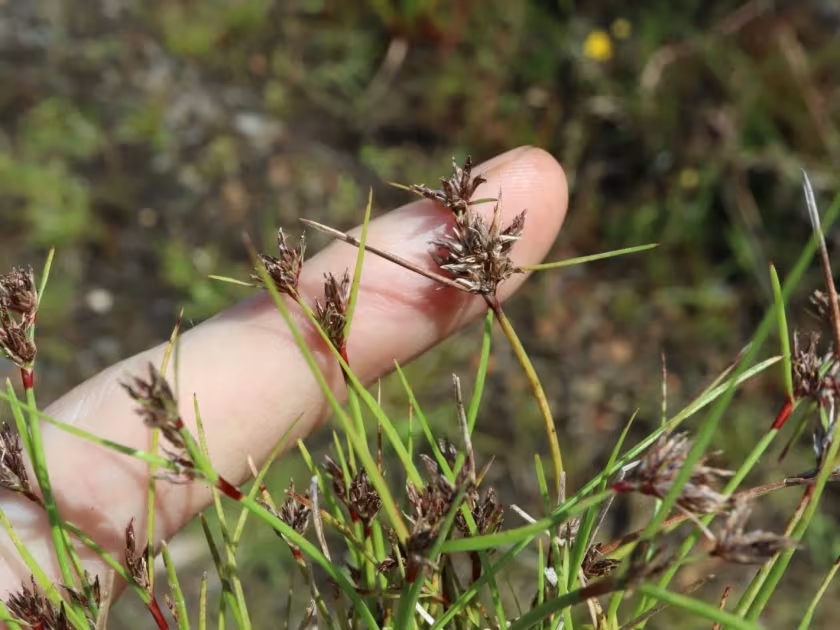
Description
Growing requirements
Schoenus apogon is a perennial member of the Cyperaceae family, widely known for its ecological resilience in wetland and bog environments. It serves as an essential species for maintaining biodiversity in moist habitats.
The plant originates from regions across Australia, New Zealand, and Southeast Asia. Its ability to colonize various waterlogged areas makes it a candidate for restoring degraded landscapes and shoreline stabilization.
Botanically, it forms dense tufts with slender, erect stems. The foliage is typically fine-textured, providing significant soil cover, which prevents erosion in riparian zones and promotes local nutrient cycling.
Cultivation requirements involve maintaining high soil moisture levels without permanent stagnant conditions. The species thrives in full sun exposure, which is necessary for vigorous growth and healthy reproductive development.
Regarding soil, Schoenus apogon adapts well to acidic to neutral pH levels. It demonstrates an impressive tolerance for nutrient-poor substrates, making it a low-input species for specialized vegetation projects.
Main diseases and pests
The main threats to this sedge include fungal pathogens triggered by poor air circulation and excessive humidity. When planted too densely, the internal parts of the tufts are susceptible to root rot.
Pest pressures are generally low; however, specialized insects can feed on the seeds and stems. Maintaining proper distance between plants helps in reducing the impact of these potential infestations.