
Scadoxus
Scadoxus Raf.
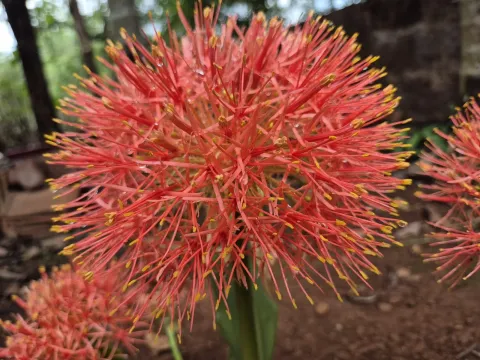
Scadoxus is a genus of bulbous plants belonging to the Amaryllidaceae family, native to tropical Africa and the Arabian Peninsula. These plants are distinguished by their spectacular, spherical inflorescences that often emerge before the foliage, creating a striking visual impact in tropical garden settings.
What the section contains

Scadoxus
Successful cultivation requires a well-draining, nutrient-rich soil medium. A mixture based on leaf mold and peat, supplemented with coarse sand or perlite, provides the necessary porosity to prevent root rot, which is a common issue for this genus due to its fleshy roots.
Regarding climatic requirements, the plant thrives in warm environments with temperatures ideally ranging from 20 to 25 degrees Celsius during the growing phase. It requires bright, indirect light, as direct sun exposure can severely damage the large, lush leaves, reducing the plant's overall vigor.
The irrigation strategy must be strictly regulated according to the plant's seasonal cycle. During the growing period, moisture must be provided consistently; however, as the foliage dies back in preparation for the dormant stage, water supply should be drastically reduced to allow the bulb to rest.
The primary economic use of Scadoxus is in the horticultural industry as a specimen plant for luxury interiors, conservatories, and as a specialized ornamental crop in regions with suitable temperate or tropical climates.
Pest pressure on Scadoxus usually involves common greenhouse pests such as spider mites, mealybugs, and scale insects. These organisms thrive in environments with poor air circulation, making regular ventilation and inspections essential for maintaining plant health.
Disease management focuses largely on preventing fungal pathogens that affect the bulb and root collar. Avoiding over-saturation of the substrate and ensuring that the bulbs are planted at the correct depth can mitigate the risk of basal rot and other soil-borne diseases.