
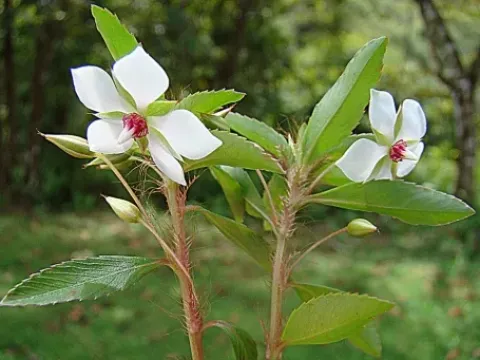
Sauvagesia
Sauvagesia
Sauvagesia is a diverse genus of flowering plants belonging to the Ochnaceae family. These plants are native to tropical regions of the Americas and are recognized for their distinct botanical structure and medicinal properties in traditional health practices.
What the section contains


Sauvagesia
The plant thrives in humid tropical forest environments. It requires a specific climate with temperatures consistently above 22 degrees Celsius and high relative humidity, making it suitable for tropical gardens or indoor greenhouses.
Regarding soil requirements, Sauvagesia prefers acidic, well-draining substrates rich in organic matter. Proper soil structure is vital as the root system is highly sensitive to waterlogging and compaction.
Light management is crucial; the plant is adapted to the dappled light of the forest floor. Cultivation must provide partial shade to protect leaves from scorching, as direct sunlight often exceeds the plant's physiological tolerance.
Watering techniques involve keeping the growing medium moist but never saturated. In agricultural or greenhouse settings, consistent moisture levels and good ventilation are the foundations of healthy growth.
Sauvagesia is susceptible to several fungal diseases, primarily those triggered by stagnant moisture and poor air circulation. Botrytis and root rot are common issues if the drainage is inadequate.
Pests such as spider mites and whiteflies frequently infest the plant, especially in controlled greenhouse environments where the air may become too dry, facilitating rapid population growth.
Biological control methods are preferred, including the use of neem oil or predatory mites, to manage pest populations without compromising the plant's chemical integrity or potential medical value.
Bacterial leaf spot is another threat, often appearing when water remains on the foliage for extended periods, providing a breeding ground for opportunistic pathogens.
Successful management depends on daily monitoring and the prompt removal of infected plant tissues to prevent secondary outbreaks across the entire collection.