
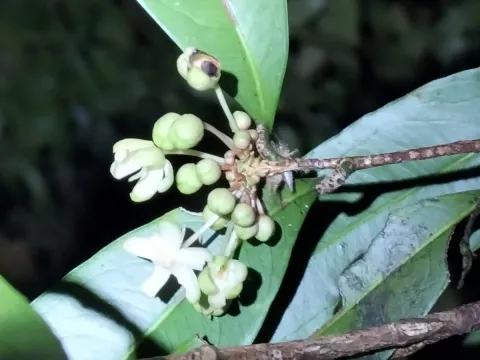
Brackenridgea
Brackenridgea
Brackenridgea is a genus of flowering plants belonging to the Ochnaceae family. These trees are native to tropical regions across Africa, Asia, and Australia, flourishing in warm and humid environments.
What the section contains

Brackenridgea
The plant thrives in well-drained, nutrient-rich forest soils. It is highly sensitive to waterlogging, making proper site selection and drainage management essential for its health and development.
Climate requirements include high temperatures and consistent humidity throughout the year. The species generally does not tolerate frost or extreme cold, which limits its outdoor cultivation to tropical zones.
Agricultural practices involve maintaining slightly acidic soil conditions and providing periodic organic amendments. Mulching around the base can help regulate soil temperature and moisture retention.
Botanically, Brackenridgea is characterized by its evergreen foliage and distinct fruit structures, which are vital for seed dispersal in its native ecosystems.
The harvest of fruits is performed manually, targeting fully mature specimens. Because of the rapid loss of seed viability, prompt processing is necessary to ensure successful propagation.
In cases where timber is utilized, harvesting is strictly regulated to support sustainable forest management. The wood is prized for its specific density and aesthetic grain patterns.
Quality control during harvest involves inspecting trees for potential pest damage, as the plants can be susceptible to specific tropical insects if stressed by poor environmental conditions.
Post-harvest handling requires climate-controlled facilities to maintain the integrity of the collected biological materials before they are processed for end-use.
As the plant is not a conventional broad-acre crop, harvesting techniques are often labor-intensive and adapted to the specific growth patterns of the individual tree species within the genus.