
Grabowski's blackberry
Rubus grabowskii Weihe ex Günther et al.
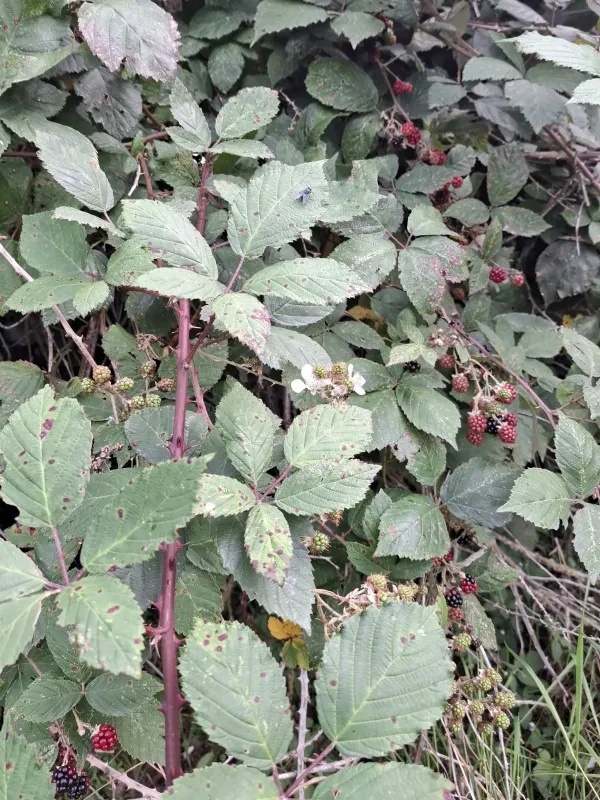
Description
Growing requirements
Grabowski's blackberry (Rubus grabowskii) is a perennial shrub belonging to the Rosaceae family. It is naturally distributed across Europe, typically thriving in woodland edges and open, semi-shaded areas.
The plant has specific environmental needs; it prefers areas with ample sunlight to ensure the maturation of canes and fruit development, while also requiring protection from strong, drying winds.
Regarding soil, this species prefers deep, fertile, and well-drained loamy soils. It is sensitive to waterlogging, so maintaining proper drainage is essential for healthy root system development.
Climate adaptability is key for Rubus grabowskii. It favors temperate climates with mild winters, as severe frost can damage the buds, necessitating protective measures in cooler cultivation zones.
Optimal planting sites should be prepared with organic matter to enrich the soil structure, ensuring that the shrub has access to the necessary nutrients during its vigorous growth phases.
Yield
Yield efficiency for Grabowski's blackberry is heavily reliant on pruning practices. Since the fruit is produced on biennial canes, managing the transition between new and old growth is crucial.
Productivity is further enhanced by vertical training on trellis systems, which improves airflow, increases light penetration, and makes the harvesting process significantly more efficient.
Consistent watering during the fruit-set and berry-filling stages is vital to achieve large, juicy berries and to maintain the plant's overall health and vigor for future growing seasons.
Supplementing the soil with balanced mineral fertilizers during spring and early summer promotes rapid canopy development and supports the metabolic demand of high-yield crops.
Proper thinning of canes to ensure that sunlight reaches the inner parts of the bush is a standard practice to maximize the total quantity and quality of the harvest each year.
Main diseases and pests
Fungal diseases like cane blight and gray mold represent significant threats, especially in humid and poorly ventilated planting environments where moisture persists on the foliage.
Pest management focuses on controlling aphids and spider mites, which can drain sap from the leaves, leading to stunted growth and reduced photosynthetic capacity of the plant.
Prevention is the primary line of defense: ensuring adequate spacing between plants and performing sanitation pruning to remove debris helps reduce the spread of fungal spores and overwintering pests.
Integrated Pest Management (IPM) practices, including the use of targeted biological controls and periodic monitoring, allow farmers to manage pest populations effectively while minimizing chemical usage.
Early spring applications of appropriate dormant sprays can effectively reduce the initial pest population and fungal inoculum, providing the plant with a clean start to the growing season.
Harvesting
Harvesting Rubus grabowskii requires a delicate approach, as the mature berries are highly perishable and prone to bruising if handled roughly during the collection process.
The berries are typically harvested in multiple passes, as they ripen asynchronously. One should wait until the fruit turns deep black and detaches easily from the receptacle to ensure peak flavor.
It is recommended to pick berries in the cool morning hours before the heat of the day, as this helps preserve the firmness and sugar concentration required for premium market quality.
Once harvested, fruit should be placed in shallow containers in a single layer to prevent stacking damage and should be moved quickly to a cool storage environment to extend shelf life.
At the end of the harvest season, the exhausted fruiting canes should be cut down to the base to make space for the new vegetative growth that will produce next year's crop.