
Arctic raspberry
Rubus arcticus L. nothosubsp. stellarcticus G. Larss.
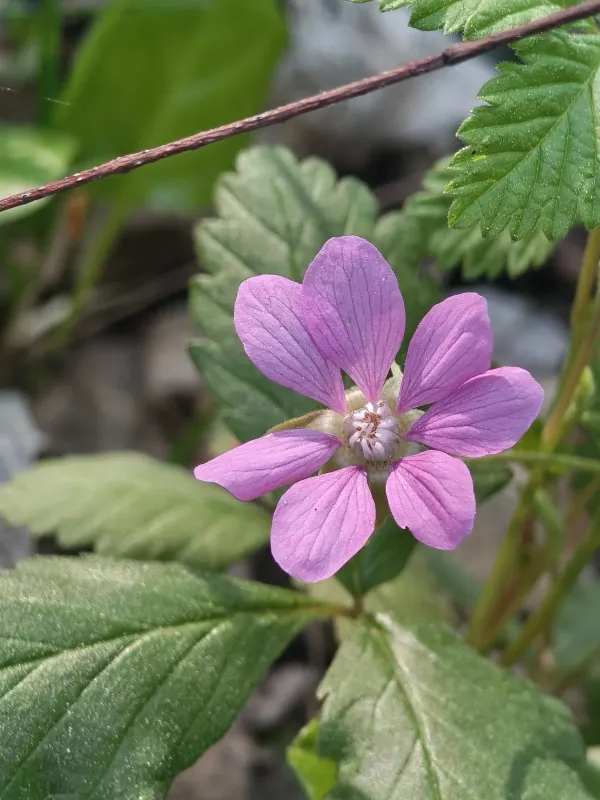
Description
Sowing dates
Planting Arctic raspberry (Rubus arcticus L. nothosubsp. stellarcticus) is best performed in early spring or late August. It is important to note that this crop propagates primarily vegetatively, through root division or runners.
To ensure successful establishment, prepare plots with light, moist, but well-drained soil. Arctic raspberry is sensitive to root desiccation; therefore, immediately after planting, the soil should be thoroughly watered and mulched with peat or wood chips.
In commercial or home garden settings, seedlings are typically spaced at 30x30 cm or 40x40 cm intervals. Close planting encourages the rapid formation of a dense carpet of stems, which effectively suppresses weed development across the plantation.
This crop belongs to the Rosaceae family and is a perennial herbaceous plant featuring a vigorous rhizome system. A biological characteristic of this species is its ability to renew its aerial parts annually, as the stems die off completely following the first frosts.
A critical aspect of establishment is selecting high-quality planting material, which must possess a well-developed root system and show no visible signs of fungal infection or stress.
Growing requirements
Arctic raspberry is a crop of northern latitudes, requiring a cool climate and high atmospheric humidity to thrive. It is ideally suited for regions with moderately cool summers and consistent rainfall throughout the vegetative season.
The plant has specific soil requirements, preferring acidic to slightly acidic peat-based soils. An optimal pH level ranges between 4.5 and 5.5, which is essential for the efficient uptake of soil nutrients.
The crop is highly sensitive to drought and direct, intense sunlight, making semi-shaded areas the best choice for cultivation. Ideal locations include areas beneath tree canopies or sites naturally protected from the afternoon heat.
Organic fertilizers, such as compost or well-rotted manure, should be incorporated during soil preparation. During the active growth phase, the plant responds well to regular irrigation, which prevents the surface soil layer from drying out.
This plant exhibits extreme cold hardiness, characteristic of species adapted to arctic environments. It successfully survives even harsh winters without additional cover, provided that a sufficient snow cover is maintained.
Yield
The yield of Arctic raspberry depends heavily on the presence of pollinator varieties, as most hybrids are self-sterile. To obtain a productive harvest, at least two or three different clones must be planted in the same area.
The flowering period occurs in late May or June, with the flowers being highly ornamental and fragrant. Berries ripen unevenly, which allows for an extended harvest period throughout July and August.
Under intensive cultivation, yields typically range from 200 to 500 grams per square meter, depending on the age of the plantation and the specific climatic conditions of the season.
The fruit is prized for its unique aroma, reminiscent of a blend of pineapple and raspberry, and its high vitamin C content. Due to its exceptional flavor profile, the Arctic raspberry is considered a premium crop for gourmet dessert production.
The maximum yield potential is reached by the third or fourth year after planting, once the root system has fully occupied the allocated space and formed a dense growth mat.
Main diseases and pests
Arctic raspberry is relatively resistant to specific berry diseases, yet high humidity can lead to gray mold (Botrytis). To prevent this, it is essential to avoid dense planting and ensure adequate airflow within the canopy.
Regarding pests, the strawberry blossom weevil and various aphid species represent the greatest threats by feeding on young leaves and flower stalks. If a major infestation occurs, organic-approved biocontrol agents should be applied.
Powdery mildew may appear during dry years with significant temperature fluctuations. Timely weed control and maintaining an optimal water balance are the most effective strategies for managing this fungal disease.
Root rot can occur if water stagnates in the soil, which is why creating an effective drainage system in planting areas is an absolute requirement for long-term plantation health.
Monitoring the plantation during the onset of the flowering period allows for the early detection of disease hotspots, minimizing potential harvest losses through prompt, targeted interventions.
Harvesting
Harvesting Arctic raspberries must be done exclusively by hand, as the fruits are extremely delicate and bruise easily under mechanical pressure. Only fully ripe berries that detach easily from the receptacle should be picked.
The best time to harvest is during the morning hours, once the dew has dried, which helps preserve the freshness and marketability of the produce. Harvested berries require immediate processing or cooling to 2–4 degrees Celsius.
In terms of culinary use, Arctic raspberry is indispensable for making high-quality jams, preserves, liqueurs, and aromatic desserts. It is highly valued by chefs for its intense natural fragrance that requires no artificial flavorings.
Transporting fresh berries is challenging due to their soft texture; therefore, the bulk of the harvest is usually processed on-site or preserved using flash-freezing methods.
After the harvest is complete, it is recommended to keep the plantation clear of weeds until autumn. This allows the plant to store sufficient energy reserves in its rhizomes for successful winter dormancy and next season's bud development.