
Rhynchosia sublobata
Rhynchosia sublobata
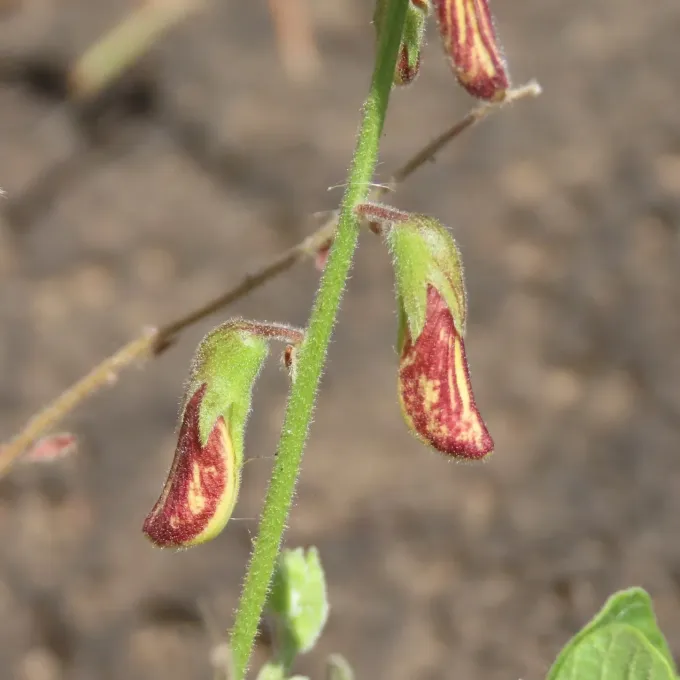
Description
Sowing dates
Rhynchosia sublobata is a member of the Fabaceae family known for its resilience and capacity to adapt to tropical and subtropical climates. Sowing should ideally occur at the start of the rainy season to ensure sufficient moisture for seed germination and the establishment of a robust root system during the early vegetative stages.
Seed preparation is a vital component of the sowing process, often involving scarification to break dormancy and ensure uniform germination rates. Properly treated seeds show significantly higher vigor, which is essential for uniform crop density across the field.
The planting density is determined by the intended use, whether the crop is being grown for green manure, forage, or seed production. Proper row spacing allows for better aeration and easier mechanical intervention during the initial growth period to minimize competition from weeds.
The plant develops a deep taproot, which allows it to access water reserves from lower soil horizons. This adaptation contributes significantly to its survival during intermittent dry spells, making it a reliable choice for areas with unpredictable rainfall patterns.
Incorporate seeds at a depth of 2 to 4 centimeters into well-tilled soil. This depth ensures that the seedling has adequate energy to reach the surface while being protected from desiccation by topsoil exposure.
Growing requirements
Rhynchosia sublobata thrives in well-drained sandy loam or loamy soils. Good drainage is essential, as the plant is susceptible to root rot if subjected to waterlogging for extended periods. Soil acidity should be maintained within a neutral to slightly acidic range (pH 6.0–7.0).
The crop is highly light-demanding and performs best in full sun. Shade negatively impacts the plant's physiological processes, resulting in elongated, weak stems and lower overall production of vegetative biomass or seeds.
Temperature is a key driver for development, with optimal growth occurring between 22 and 30 degrees Celsius. The crop is sensitive to cold and frost; therefore, the planting schedule must be aligned with local climate conditions to avoid late or early frost damage.
As a legume, it forms beneficial symbiotic associations with nitrogen-fixing bacteria in the soil. This trait makes it an excellent candidate for crop rotation systems, as it contributes to soil fertility and reduces the need for synthetic nitrogen fertilizers.
Regular monitoring of soil fertility is recommended, particularly regarding phosphorus and potassium levels. Although the plant is self-sufficient regarding nitrogen, balanced mineral supplementation can significantly boost yield potential in degraded soils.
Yield
Yields of Rhynchosia sublobata are largely dependent on the fertility level of the site and the availability of moisture. When grown for forage, the plant provides a high-protein feed that can be integrated into livestock rations to enhance nutritional balance.
For seed production, yield stability depends on the health of the pollination phase and adequate soil moisture during the pod-filling stage. Growers should focus on keeping the field free from stressors to maximize the output of high-quality seeds for future seasons.
When used as a cover crop or green manure, the biomass yield contributes to improving soil organic matter and structure. This indirect benefit improves the productivity of subsequent crops planted in the rotation cycle, demonstrating the plant's long-term agricultural value.
Efficient management of the flowering period is crucial. By ensuring that the plant is not limited by nutrient availability during this phase, farmers can significantly increase the seed count per pod, which is a major contributor to total harvest volume.
Documenting yield results under different management practices helps in refining the cultivation strategy. Over time, these practices lead to better-adapted crops and more predictable performance in varying environmental conditions.
Main diseases and pests
Pest management is centered on controlling aphids and various beetle species that target young leaves and tender pods. These pests can cause significant damage to the plant's photosynthetic capacity and reduce overall seed viability.
Fungal pathogens such as leaf spot and powdery mildew are prevalent in humid conditions. Mitigation involves maintaining proper planting distances to promote airflow, as well as the use of preventative fungicides if necessary during periods of high humidity.
Root-knot nematodes pose a threat to the subterranean parts of the plant, potentially hampering the nitrogen fixation process. Using certified disease-free seeds and practicing crop rotation are the most effective non-chemical strategies against these soil-borne pests.
Early-stage weed competition is a significant threat, as the plant can be easily overgrown by faster-growing grasses or broad-leaved weeds. Timely mechanical weeding or selective herbicide application is necessary to give the crop a competitive advantage.
Implementing an Integrated Pest Management (IPM) approach is recommended to balance pest control with environmental sustainability. This involves monitoring pest populations and utilizing biological control agents before resorting to broad-spectrum chemical solutions.
Harvesting
Harvesting for forage should take place during the early to mid-flowering stage, as this is when the protein content of the vegetative mass is at its peak. Cutting at the right time ensures the highest quality feed for animal consumption.
Mechanical harvesting requires well-calibrated equipment to ensure a clean cut without causing excessive damage to the root crown or soil structure. Proper height adjustment is essential to prevent contamination of the forage with soil particles.
For seed harvesting, timing is critical to avoid shattering. The crop should be harvested once the pods have matured and turned color but before they naturally open and drop the seeds. Slow, careful combining is recommended to minimize mechanical damage to the seeds.
Post-harvest storage requires that seeds be dried to a safe moisture level, typically below 12-14 percent, to prevent storage molds and maintain germination viability. Proper aeration during storage in cool, dry facilities is mandatory.
Plant residues left after harvesting can be incorporated into the soil as a nutrient-rich organic matter. This practice not only manages waste efficiently but also helps in building long-term soil health and physical integrity for future harvests.